


Local Thai Dishes Worth Exploring in Phuket

You’ve tried the classics (Pad Thai, Green Curry, Massaman) and now you want to go deeper. These are the dishes that locals in Phuket actually eat on a regular basis. They’re not extreme or scary (we have a separate page for that), but they go well beyond the tourist menu.
If you’re new to Thai food, start with our 10 best dishes for first-time visitors. For Phuket-only heritage dishes, see our Phuket specialities guide. And for regional southern Thai cuisine, explore the best southern Thai food. Try all of these at Phuket’s best local restaurants.
Tom Yam Goong: Beyond the Tourist Version
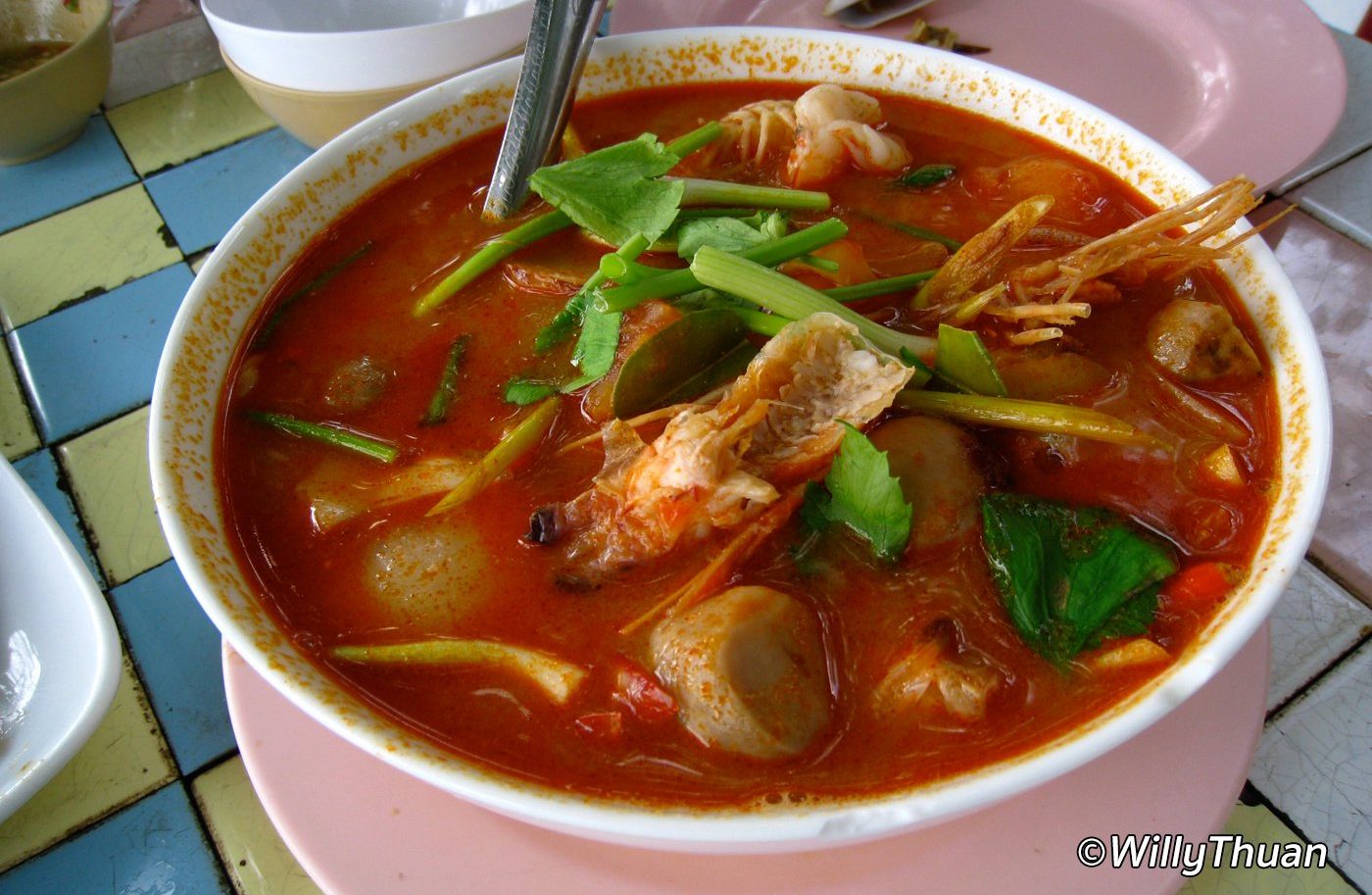
You’ve probably tried Tom Yam already, but the version served in local restaurants in Phuket is a different experience. Tom Yam means hot and sour soup, and Goong means prawns. Other popular variations are Tom Yam Talay (seafood), Tom Yam Gai (chicken), and Kradook Moo (pork ribs). The orange colour in Tom Yam Goong Mae Nam comes from the fatty juice in the head of river prawns. This juice adds the aroma, colour and richness that makes the local version so special. Ask for Nam Khon (creamy) for the rich version, or Nam Sai (clear) for a lighter, herbier broth. In southern Phuket restaurants, expect it spicier than up north.
Where to find it in Phuket: One Chun and Raya House in Phuket Town, or any local seafood restaurant.
Som Tam: The Southern Way
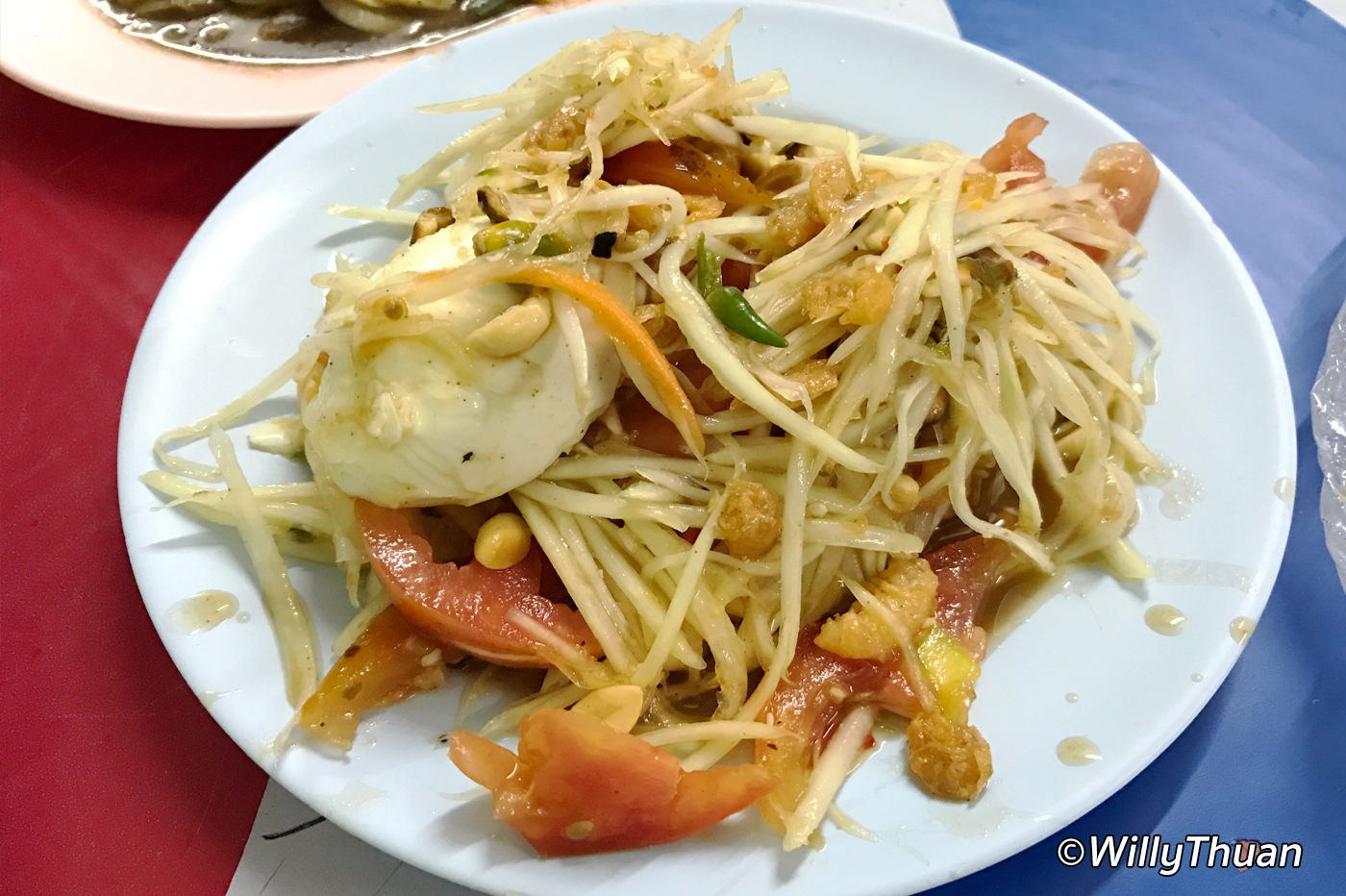
Som Tam is one of the cornerstones of Thai cuisine, and it comes in many versions, but the main ingredients almost always include grated green papaya with fish sauce, lime juice, chillies, dried shrimp, green beans and peanuts. Som Tam Tai is the simplest form and safest for most people. But here in southern Thailand, locals prefer Som Tam Poo with salted black crabs and Som Tam Kai Kem, prepared with salted eggs, much more pungent and intense than what you’ll find in Bangkok or the tourist areas. Ask for ‘Mai Pet’ (not spicy) because the default here is seriously hot. Eat it with Khao Niao (sticky rice) or Kanom Jeen (cold rice noodles).
Where to find it in Phuket: Look for street vendors with a mortar and pestle, that’s your sign of fresh Som Tam. Isaan-style restaurants around Phuket Town are the most authentic.
Kanom Jeen: Phuket’s Favourite Breakfast
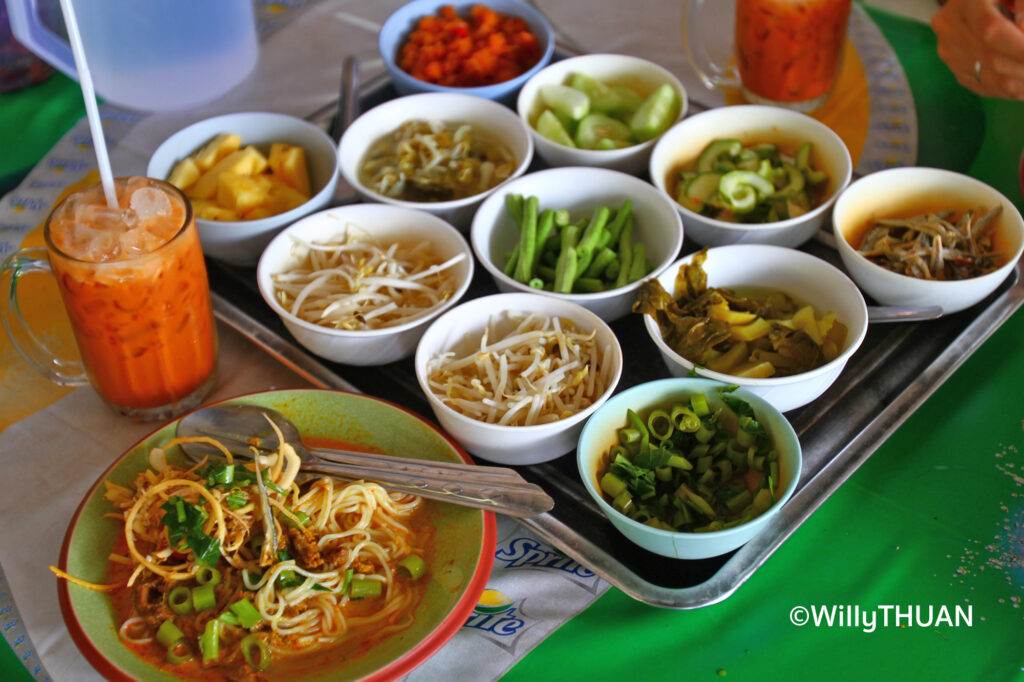
Kanom Jeen is without a doubt our favourite Thai breakfast on weekends. Cold rice noodles are served with the curry of your choice (spicy fish curry, green curry, or a milder crab sauce) and then you add your own toppings from a spread of fresh vegetables, pickled garlic, sliced banana flower and crispy bits. It’s a hands-on, build-your-own meal that’s deeply satisfying. We never miss a chance to go to ‘Pa Mai Kanom Jeen Restaurant’ on Satun Road in Phuket Town, just next to the Blue Elephant restaurant, if we manage to wake up on time, of course. Pa Mai is open from 5.30 am to 11 am. Get there early, the best curries run out fast.
Where to find it in Phuket: Pa Mai Kanom Jeen and Kanom Jeen Saphan Hin in Phuket Town. Also Mae Ting, just down the same road as Pa Mai.
Hor Mok Talay: Spicy Fish Mousse

Hor Mok is a spicy curry fish mousse made of coconut milk, chilli paste, fish and fragrant herbs, all wrapped in banana leaf and steamed or grilled. The southern Phuket version has a greater aroma with a smooth, silky texture that’s different from what you’ll find in central Thailand. Some restaurants steam it in small banana leaf cups, others in coconut shells or clay pots. It can be mildly spicy or fiery depending on the cook, so test a small bite first. Hor Mok is also a key part of southern Thai cuisine, one of those dishes that shows you the depth of local cooking.
Where to find it in Phuket: Kan Eang @ Pier in Chalong, Piang Prai at Bang Pae Waterfall, and most seafood restaurants.
Khao Soi: Northern Curry Noodles in Phuket
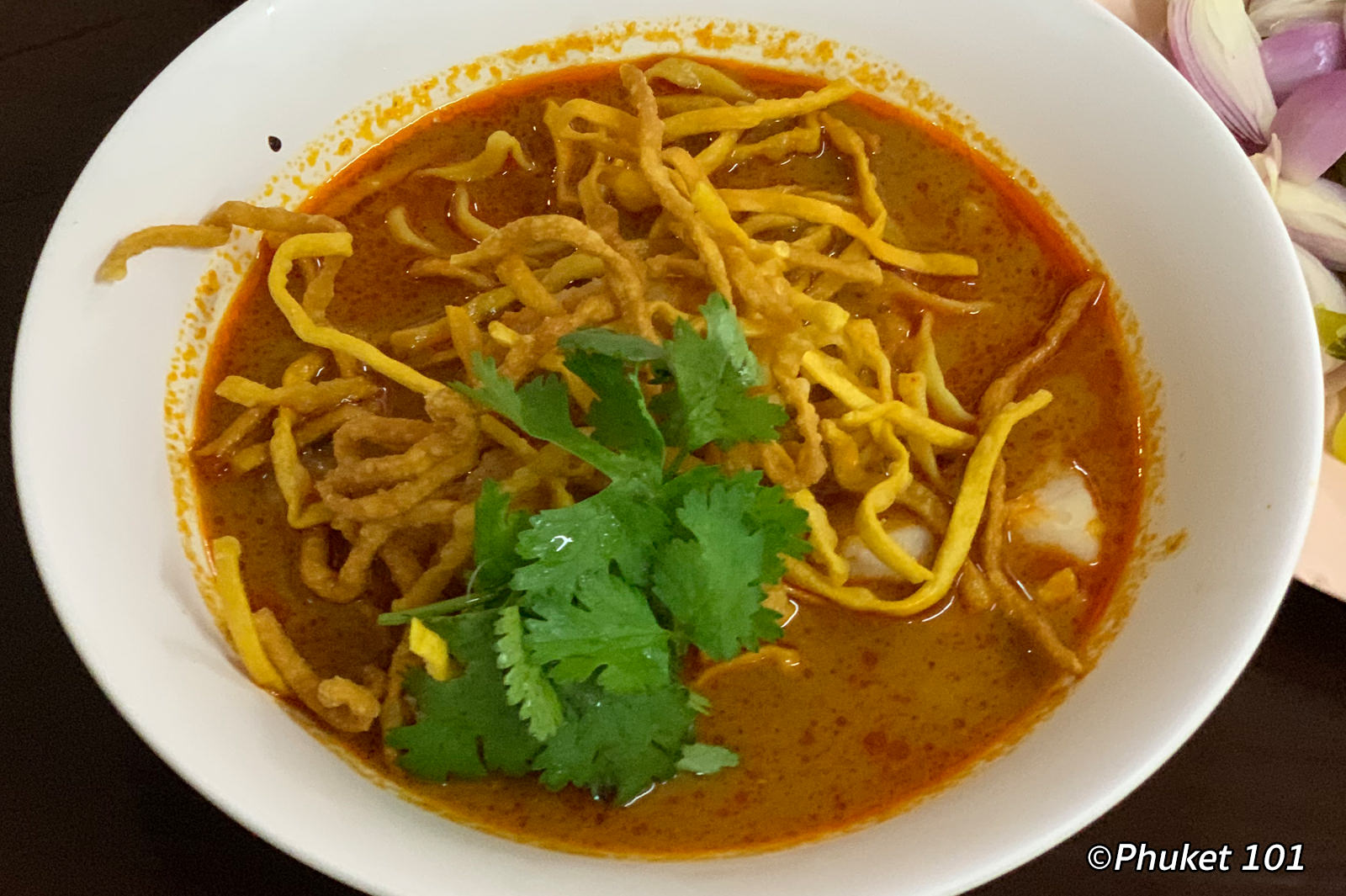
Khao Soi is a rich curry noodle soup that originated from a Muslim community in Yunnan, China, who settled in Thailand’s northern ‘Lanna’ region. The dish combines soft egg noodles swimming in a creamy coconut curry broth, topped with a nest of crispy fried noodles for crunch. Being Muslim food, the meat is either beef or chicken, never pork, though modern variations include tofu or fish. The contrast between the soft and crispy noodles, the rich curry, and the pickled mustard greens and shallots served on the side makes every bite interesting. It’s not a traditional Phuket dish, but it has found a loyal following here.
Where to find it in Phuket: There’s a well-known Khao Soi shop on Yaowarat Road in Phuket Town, and several Muslim restaurants around the island serve it.
Gaeng Fak: Gourd Curry
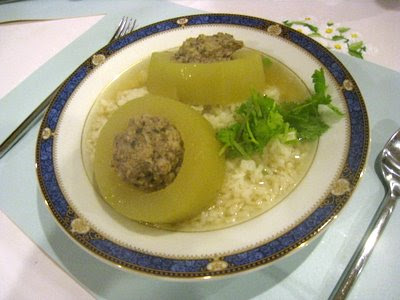
Gaeng Fak is a humble home-style curry that you’ll rarely see on tourist menus, but it’s a staple in Thai households across the south. ‘Fak’ refers to a type of gourd: Fak Kiew is the most common (a pale green, mild-flavoured gourd), while Fak Tong is pumpkin and Fak Maew is chayote. The gourd is simmered in a light coconut curry with shrimp or pork until it becomes soft and absorbs all the flavour of the broth. It’s comfort food, not flashy, not spicy, just deeply satisfying. If you see it on a menu at a local rice-and-curry shop (raan khao gaeng), order it. It’s one of those dishes that tells you a lot about everyday Thai cooking.
Where to find it in Phuket: Look for it at local rice-curry shops (raan khao gaeng) in Phuket Town, especially around the morning markets. It’s a lunch dish, rarely served at dinner.
Hor Mok Kanom Krok: Fusion in a Clay Pan
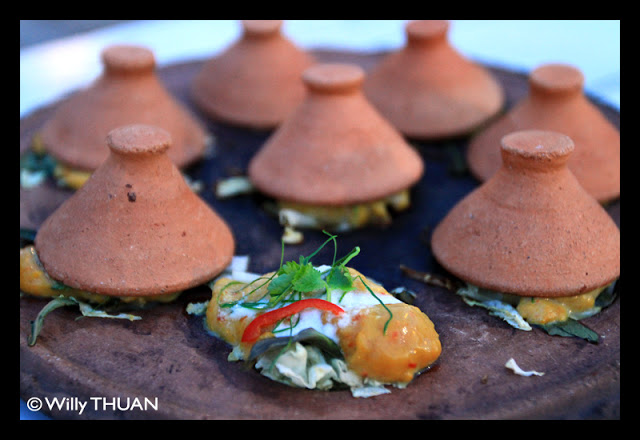
Hor Mok Kanom Krok is a creative dish that combines two Thai specialities in one. Hor Mok is the spicy fish mousse (similar to Malaysian otah-otah), and Kanom Krok is a sweet coconut milk dessert traditionally cooked in a round clay pan with small half-sphere moulds. Here, the spicy hor mok filling replaces the sweet coconut, so you get little half-moon bites of savoury fish mousse, crispy on the outside and soft inside, with all the aromatics of the curry paste. It’s playful, fun to share, and makes a great appetiser or side dish. Not many restaurants serve it, so order it when you spot it on the menu.
Where to find it in Phuket: Thai seafood restaurants with creative menus, try asking at restaurants in Phuket Town.
Poh Taek: Fisherman’s Spicy Seafood Soup
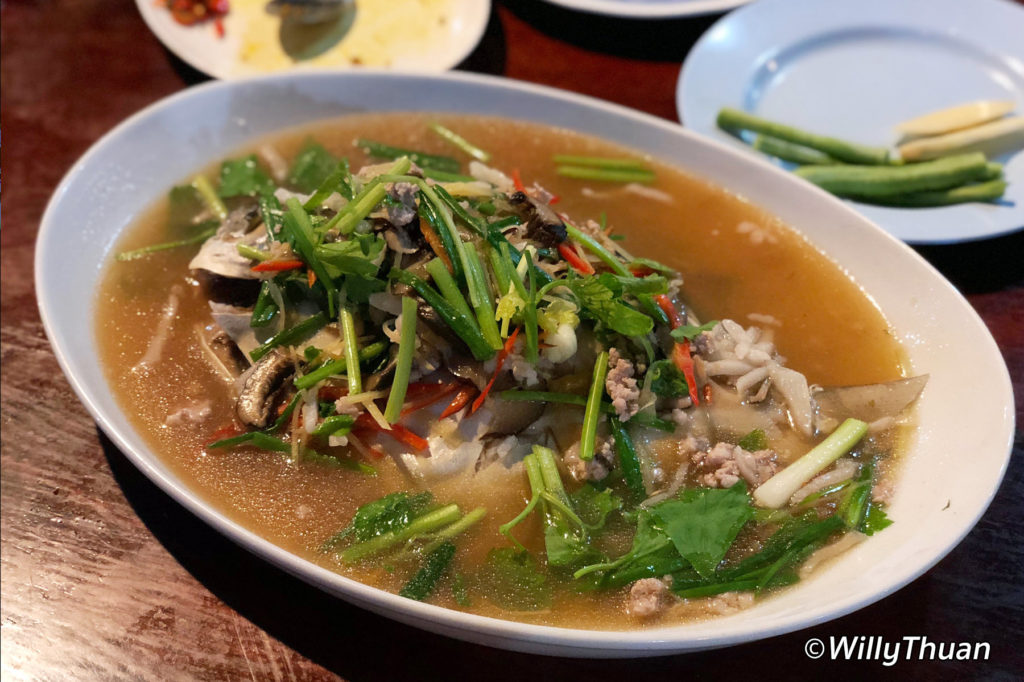
The name ‘Poh Taek’ means ‘broken fisherman’s basket’, the idea being that the fisherman’s catch all tumbled into the pot. And that’s exactly what you get: a clear, herb-loaded broth brimming with prawns, squid, fish, mussels and whatever else was fresh that day. The soup looks like Tom Yam’s cousin, but the flavour is distinct. Several additional herbs and ingredients give it a more complex, deeply aromatic character. The broth is clear but can be seriously spicy with fresh bird’s eye chillies. You won’t find this dish in most touristy seafood restaurants; it’s a local favourite that rewards those who seek it out.
Where to find it in Phuket: Ask for it at local seafood restaurants. If they have fresh catch, they can usually make it. Laem Hin Seafood near Phuket Town is a good bet.
Gai Yang: Thai Grilled Chicken
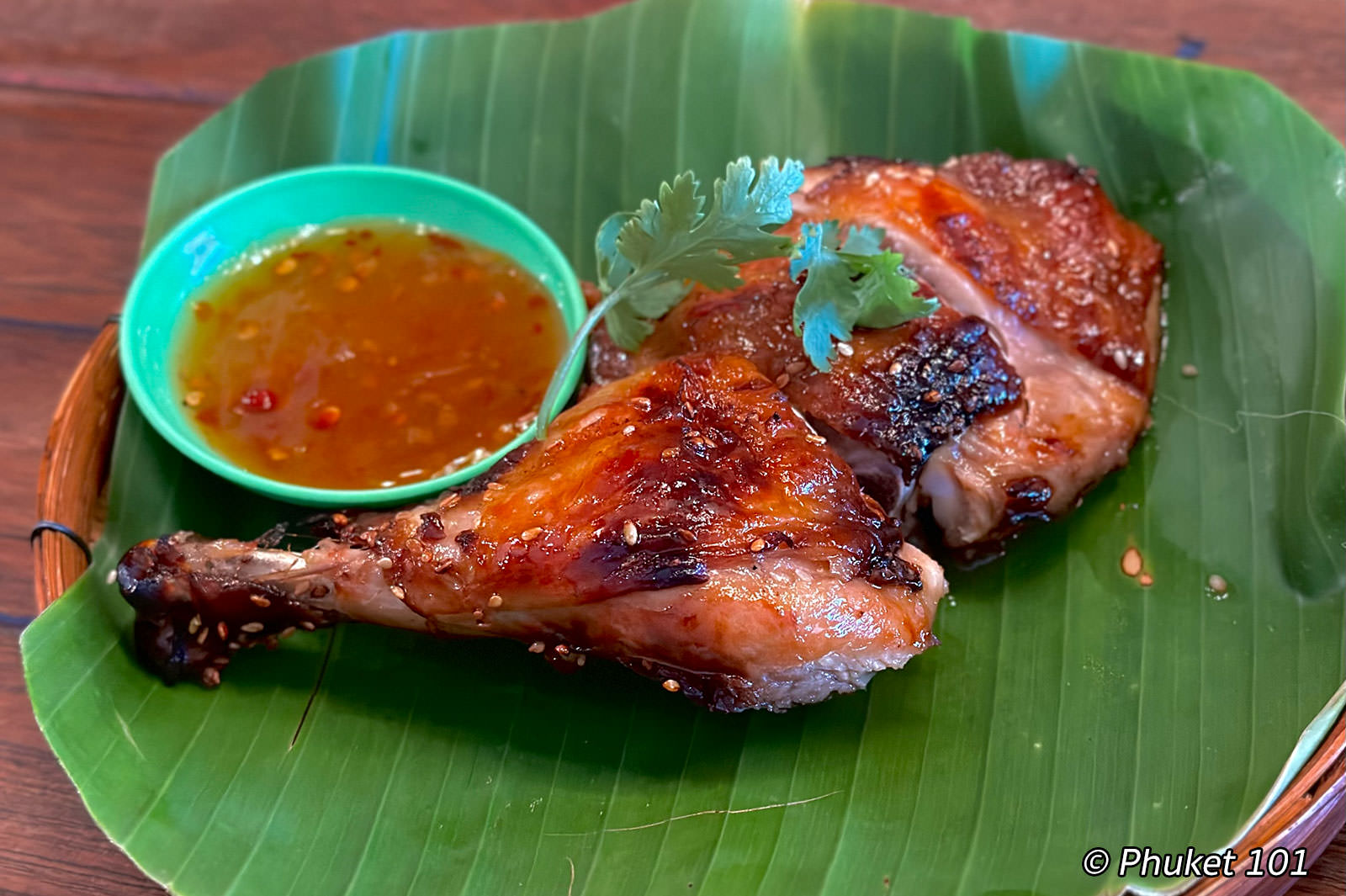
Gai Yang is one of those dishes that every Thai person grows up eating but rarely makes it onto tourists ‘best of’ lists. A whole chicken (or half) is marinated in garlic, coriander root, white pepper and fish sauce, then slowly grilled over charcoal until the skin turns golden and crispy while the meat stays juicy inside. The smoky aroma from roadside Gai Yang stalls is one of the defining smells of Thailand. It’s always served with sticky rice and a sweet chilli dipping sauce (nam jim jaew), and often alongside Som Tam. The combination of grilled chicken, papaya salad and sticky rice is the ultimate Thai comfort meal.
Where to find it in Phuket: Look for roadside stalls with rows of chickens spinning over charcoal. The markets in Phuket Town and along the main roads always have Gai Yang vendors, especially in the late afternoon.
Khao Man Gai: Phuket’s Chicken Rice Obsession
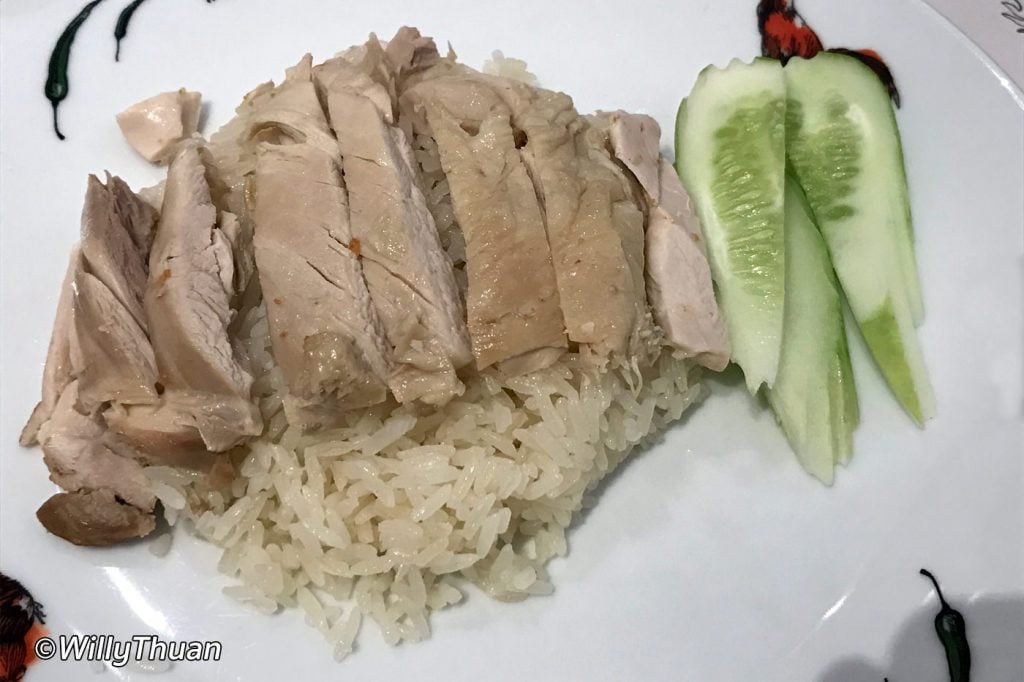
Khao Man Gai might look simple, but in Phuket, it’s taken very seriously. The best shops have queues out the door by 10 am, and once the chicken runs out, they close for the day. The dish came to Thailand with Hainanese Chinese immigrants, and Phuket’s version stays true to that heritage: poached chicken served on rice cooked in chicken fat and broth, with a bowl of clear soup on the side. What separates a great Khao Man Gai from an average one is the rice; it should be fragrant, slightly oily, and infused with garlic. The trio of sauces (ginger, dark soy, and chilli) lets you adjust every bite. Locals argue passionately about which shop is best.
Where to find it in Phuket: Kota Khao Man Kai in Phuket Town and Briley Chicken Rice in Patong Beach are the two most famous. Go early.
Roti: Phuket’s Beloved Local Flatbread
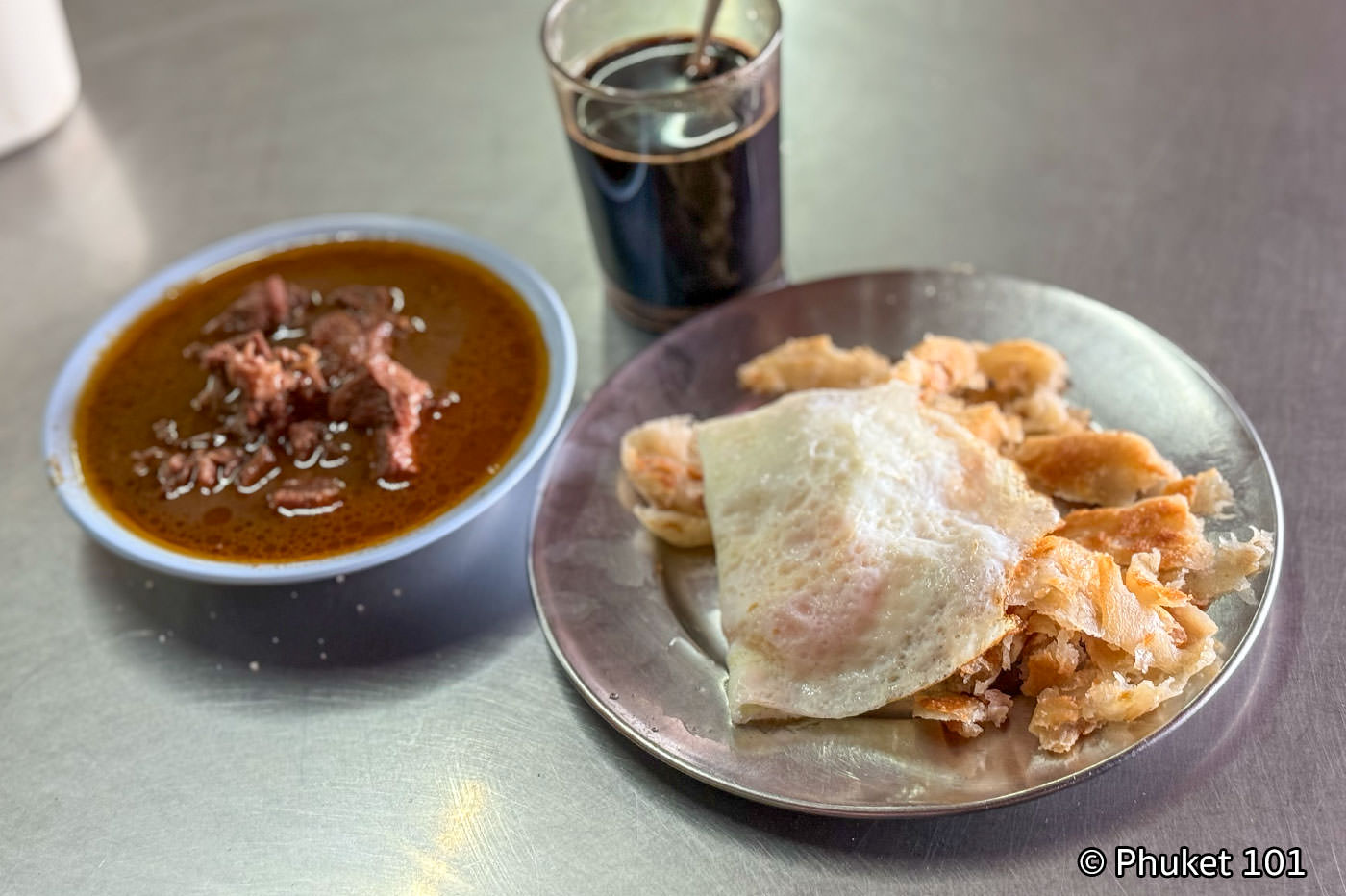
Roti in Phuket is not the sweet banana-and-condensed-milk street snack that most tourists know. The real local roti is a savoury, flaky flatbread served with rich curries, usually a massaman or a thick chicken or beef curry. The dough is stretched paper-thin, folded into layers and cooked on a hot griddle with oil until it puffs up crispy and golden. You tear off pieces and use them to scoop up the curry, much like Indian naan but lighter and crispier. Two Phuket roti shops have made it into the Michelin Guide, and for good reason: the combination of buttery, flaky bread with a slow-cooked curry is one of the most satisfying meals on the island. I go there all the time for breakfast.
Where to find it in Phuket: Roti Chaofa and Roti Taew Nam, both Michelin-recommended, in Phuket Town.
Rad Na: Noodles with Thick Gravy
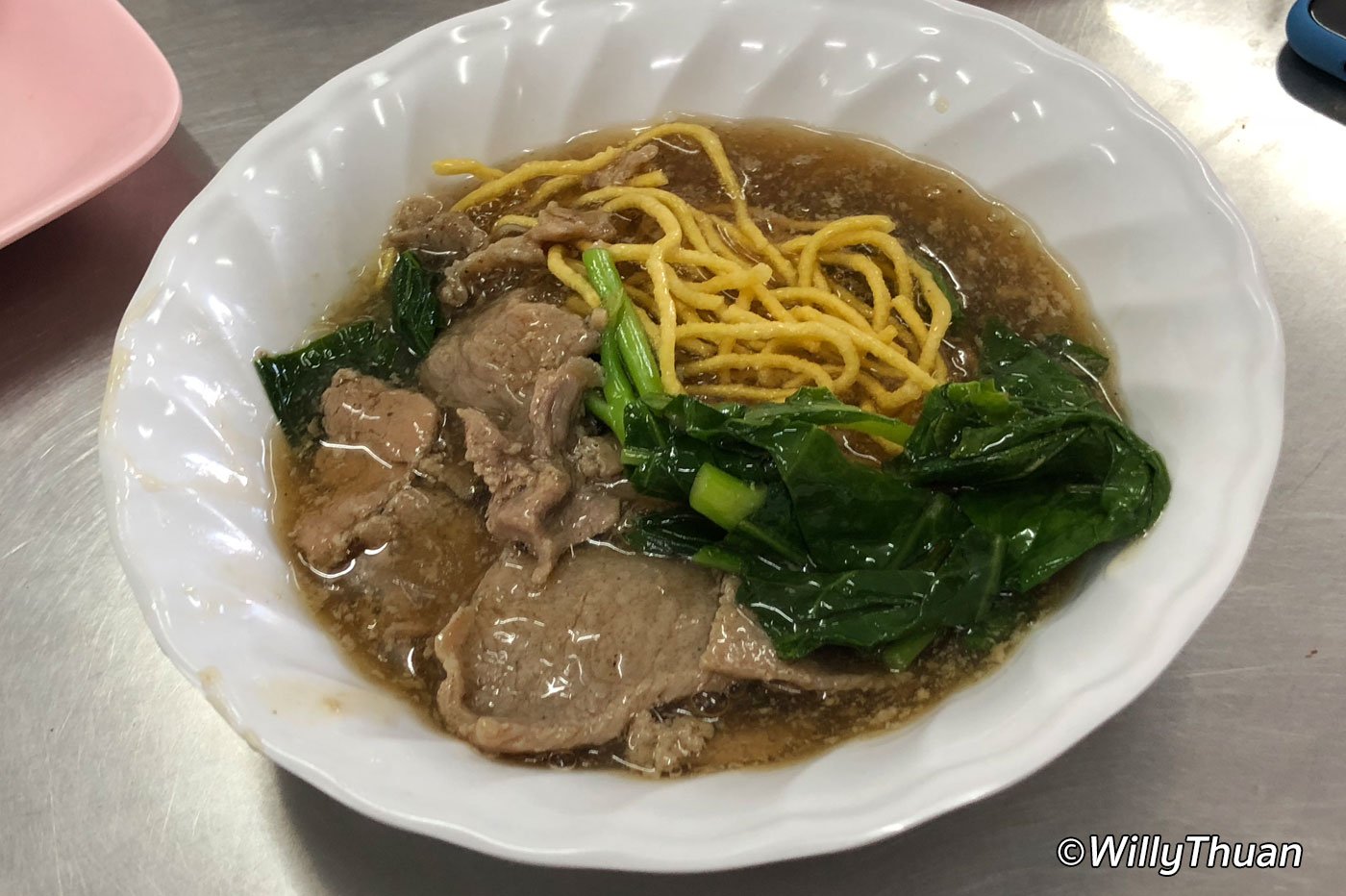
Rad Na is a comforting noodle dish of wide, flat rice noodles (sen yai) first seared in a smoking-hot wok for a slightly charred flavour, then smothered in a thick, savoury gravy made with soy sauce, garlic, and a touch of vinegar. The gravy is loaded with Chinese broccoli (kana) and your choice of pork, chicken, or seafood. It’s mild, filling, and one of those dishes that Thai people eat when they want something quick and satisfying without any chilli drama. Every noodle shop in Thailand serves Rad Na, but it rarely shows up on tourist guides, which is a shame, because it’s one of the most reliably delicious things you can order.
Where to find it in Phuket: Khun Jeed Yod Pak Restaurant is the best local Rad Na restaurant in Phuket.
More About Thai Food
Local Restaurants in Phuket