

Exploring Thalang Road

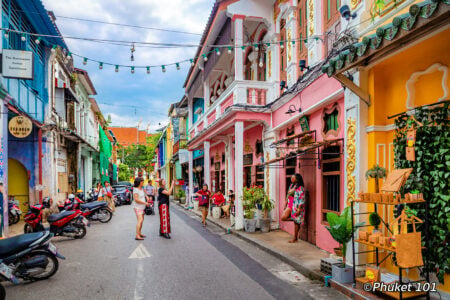
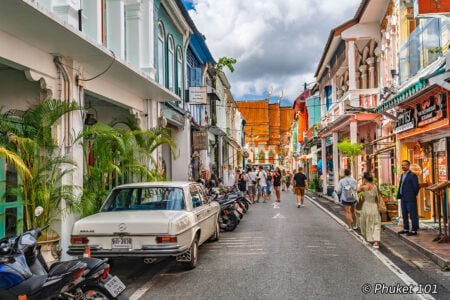
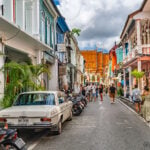
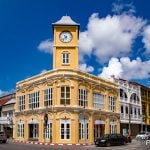
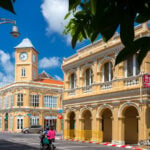
Thalang Road is the most famous street in the historic part of Old Phuket Town. The municipality and owners managed to revive most of the old Sino-Portuguese shophouses and bury the ugly cables Thailand is so famous for. Thalang has become selfie heaven, especially the tiny Soi Romanee, which was voted one of the most beautiful streets in the world at one point.

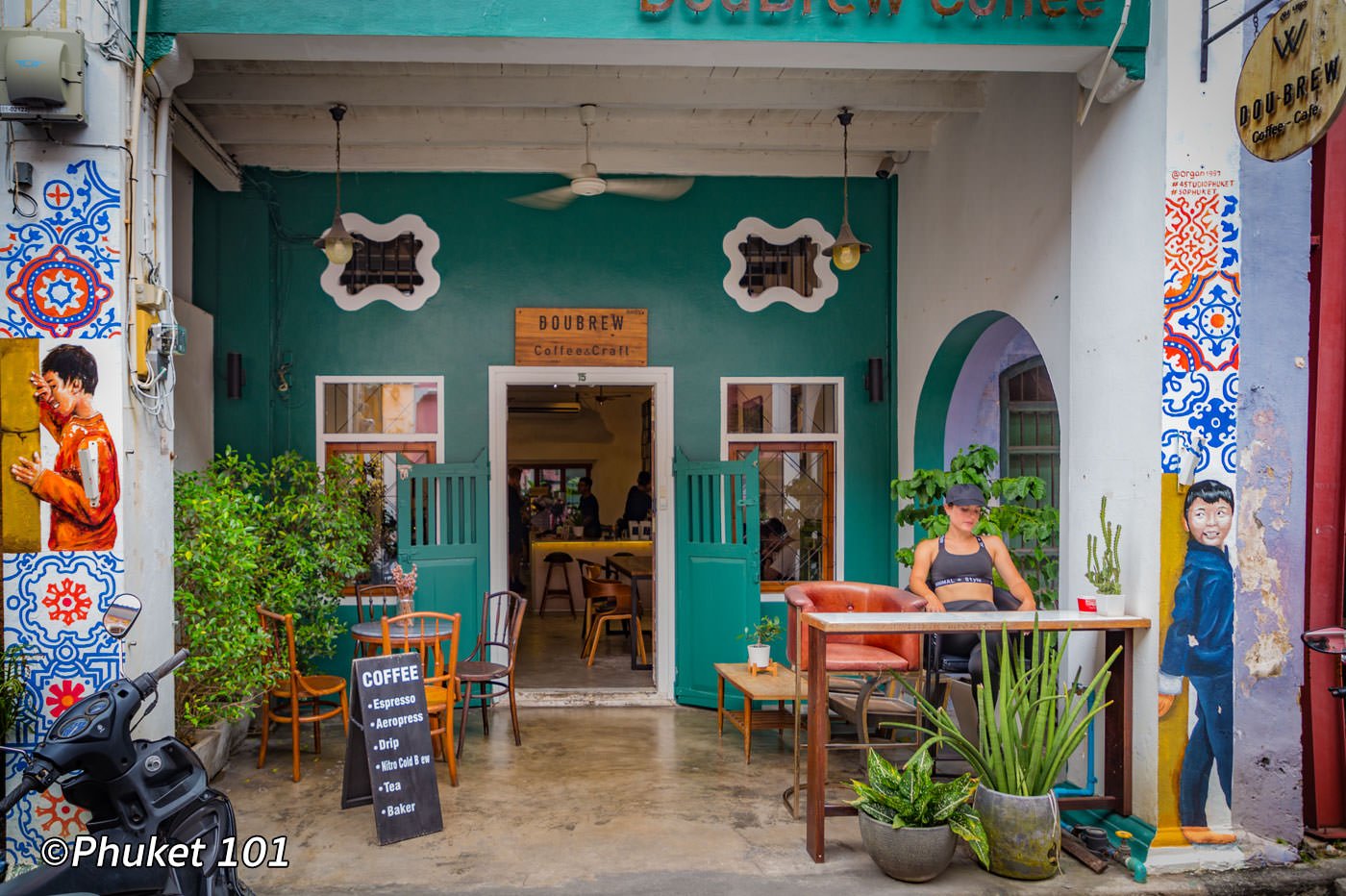
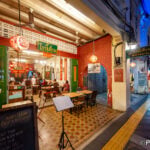
The street is lined with small cafes, traditional or fashionable boutiques and a few restaurants. All have one thing in common: A few years back, they realized that the cutest cafe attracted more customers! They are now all decorated with memorabilia from the past of Phuket, offering even more selfie opportunities, and some are truly beautiful.
Through the Years
I first drove through Thalang Road in the mid-1990s, and there was no reason to stop. It was a quiet street lined with fabric shops and hardware stores, the kind of place locals passed through on the way somewhere else. Soi Romanee was a row of abandoned, crumbling shophouses. Nobody photographed it because there was nothing to photograph. Phuket Town itself was not on anyone’s “must-do” list. Tourists stayed on the beaches, and that was it.
The first sign of change came around 2001 when a place called The Loft opened, an expat-run venue in a converted shophouse that was the first upscale spot on a street that was dead quiet at night. Suddenly, people started paying attention to these old buildings. Then China Inn opened around 2008 in a beautifully restored shophouse, and it showed everyone what a Sino-Portuguese building could become when the work was done with care. Kopitiam by Wilai followed around 2010, one of the first local restaurants to pull in tourists with good Thai food and a colourful design, and a secret back passage that led straight to the Shrine of the Serene Light.
The real turning point was 2010, when Thalang Road became the first street in Phuket to bury its electric cables underground. The ugly wire tangles disappeared, the shophouse facades suddenly looked beautiful, and then, in late 2013, the Sunday Walking Street Market launched. That was the moment that put Thalang Road on the map forever. Within a few years, every shophouse was being converted into a cafe, a boutique, or a guesthouse. The street I used to just drive through had become the most photographed place in Phuket.
What to See and Do on Thalang Road
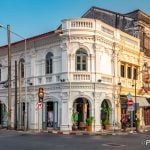
All the shophouses along the street are built with the same design. A very long and narrow house with a tiny facade to keep the house cool by allowing a breeze to flow through. The front is a door with a window on each side and 2 small windows above (eyes). The covered space in front of each shophouse creates a very long archway that offers shade and shelter, as well as space to display items on sale.

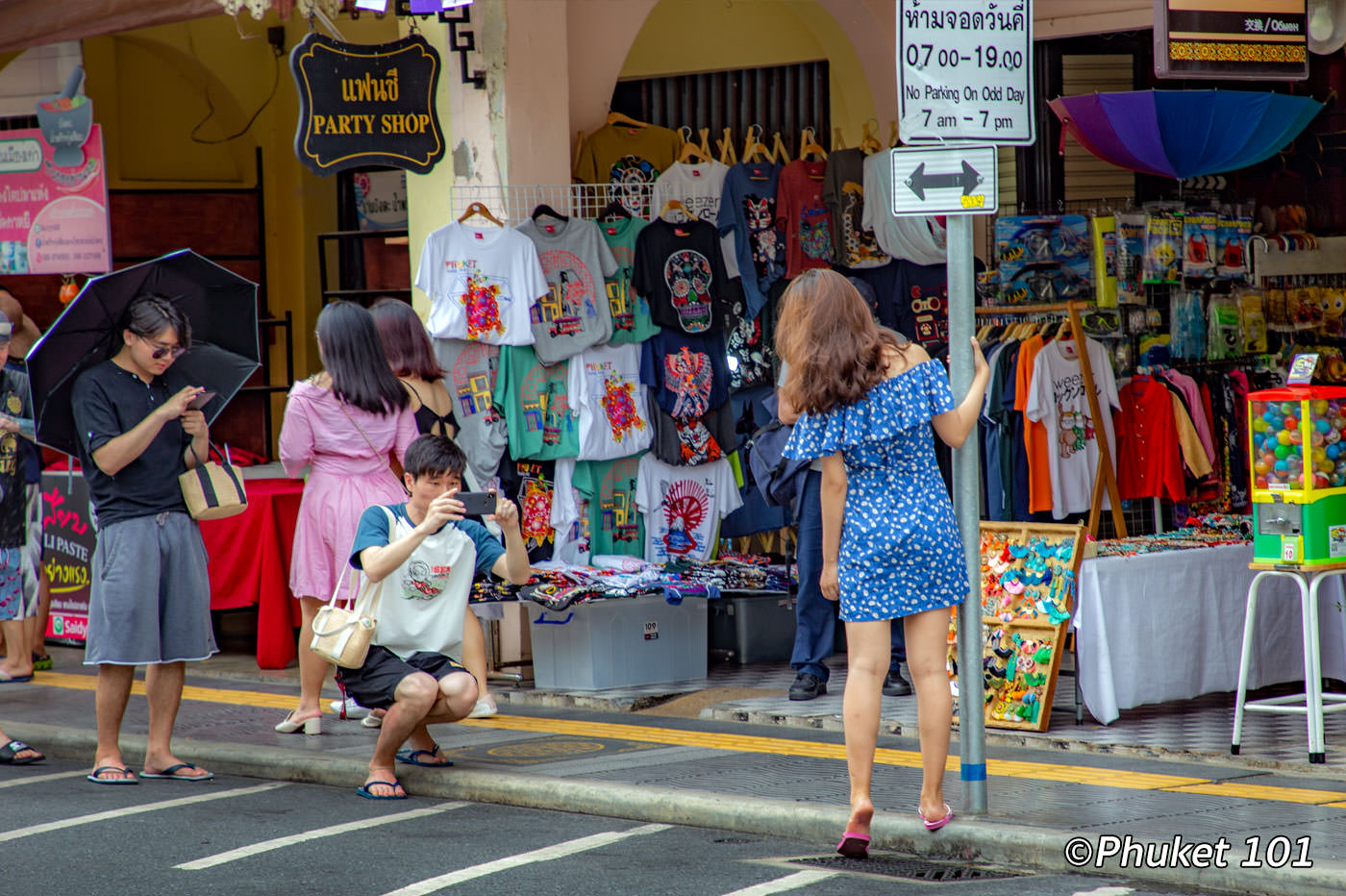
This long walkway has mostly been cleared, and it now has a lot of charm. Wherever you look during the day and even more during the weekend, you will see hordes of young people posing here and there. Even the parking signboard has become a favourite!
But somehow, even though I do appreciate the effort of renovation, I still prefer old houses in their state of old houses. You can feel their story, how many lives they witnessed and how many little secrets they are hiding.
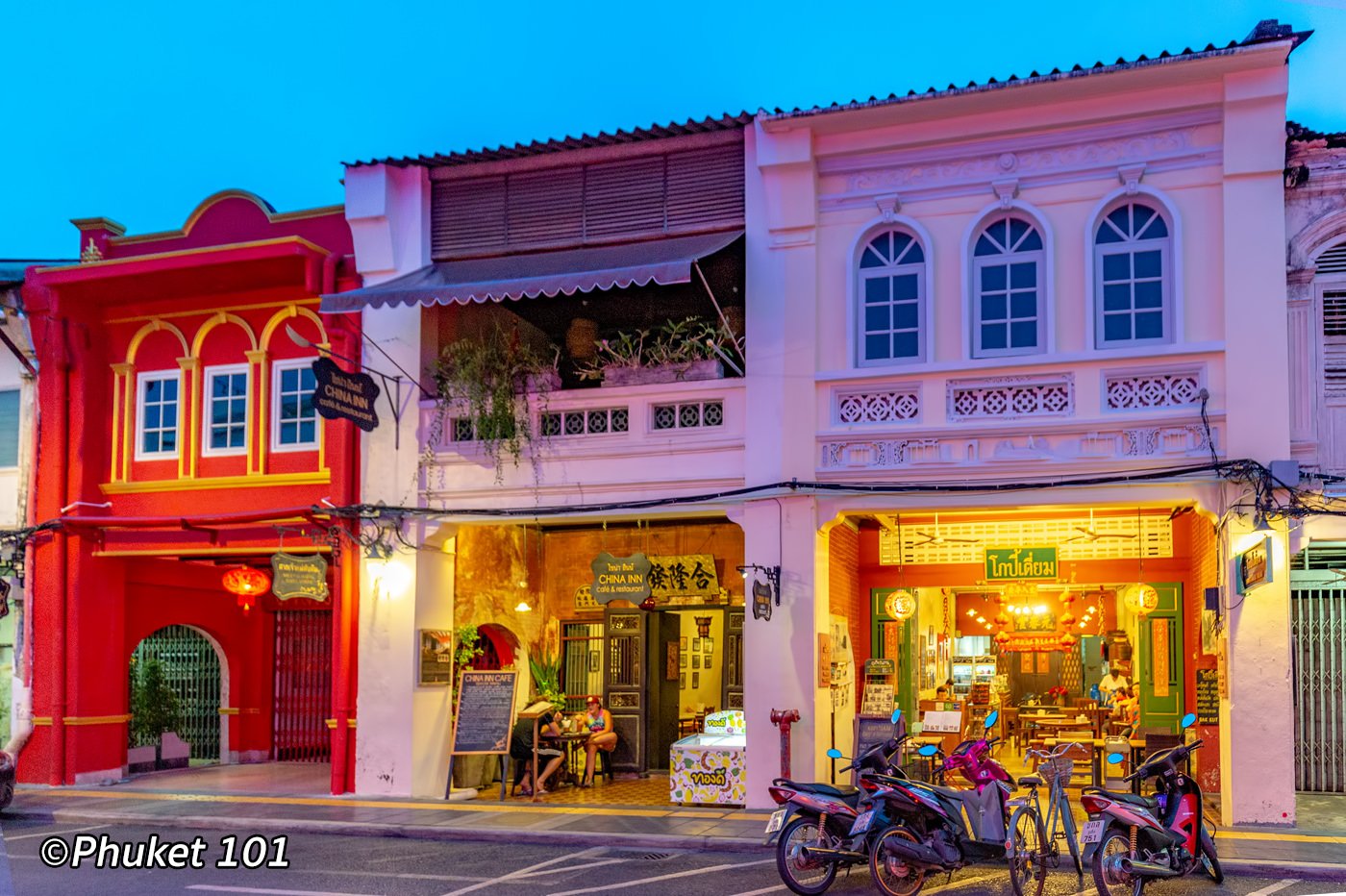
The old Chinese pharmacies are surprisingly timeless, and hairdressers are coming straight out of a ’60s movie. If you want to take photos in there, get ready to be told off; people here are running a business, and there are more photographers than buyers. Many shophouses along the street are privately owned, but little by little, people move out of Thalang to escape tourists and the lack of parking.
Soi Romanee
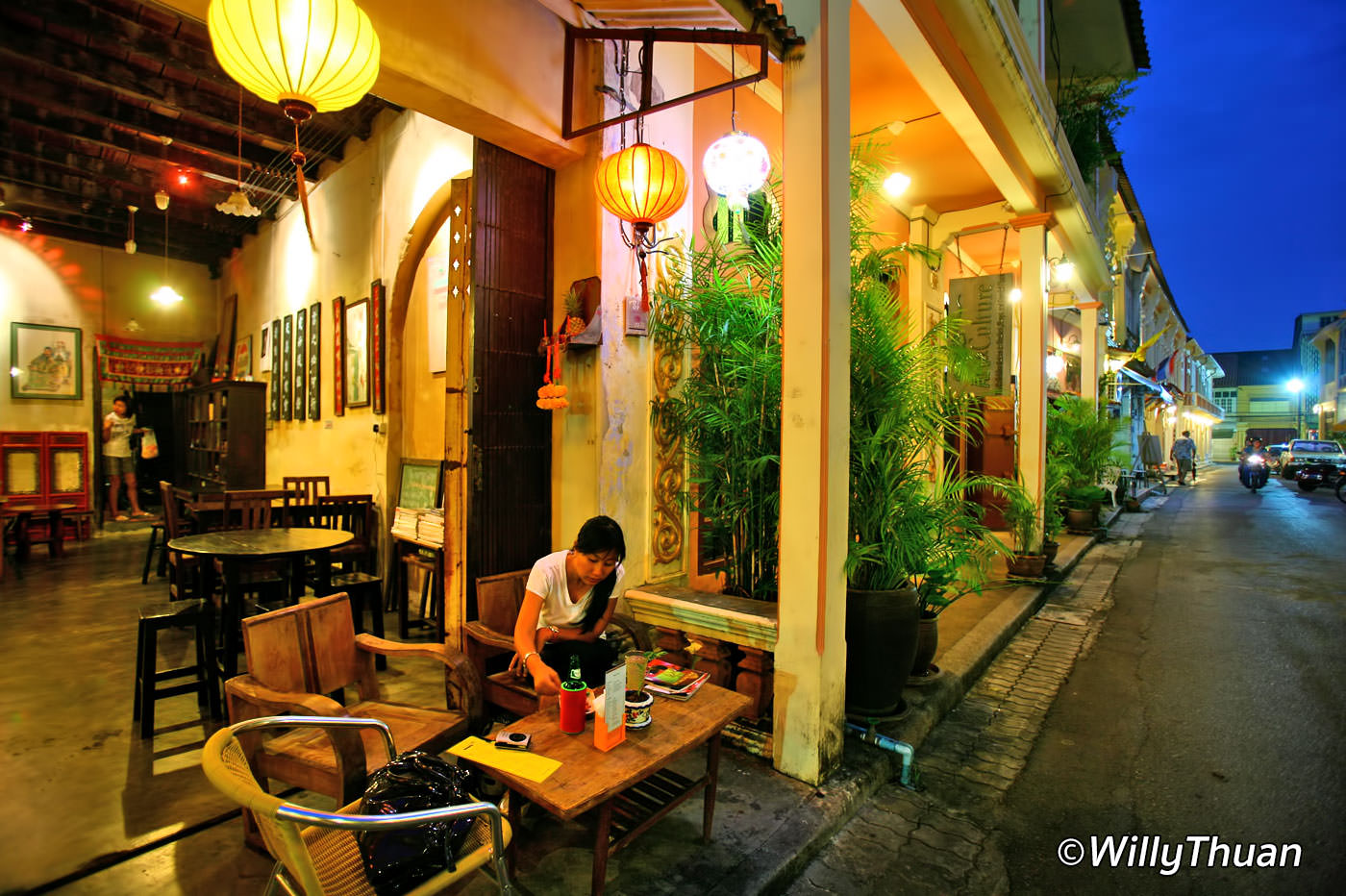
Soi Romanee is a short lane branching out from Thalang Road that takes you to Dibuk Road. This 125-meter-long colourful street has a long history, as it was known to be the gambling and red district of Phuket! As is often the case, this once neglected and looked down lane became the most trendy street of old Phuket Town and is now home to classy coffee shops and guesthouses.
Hainan Shrine
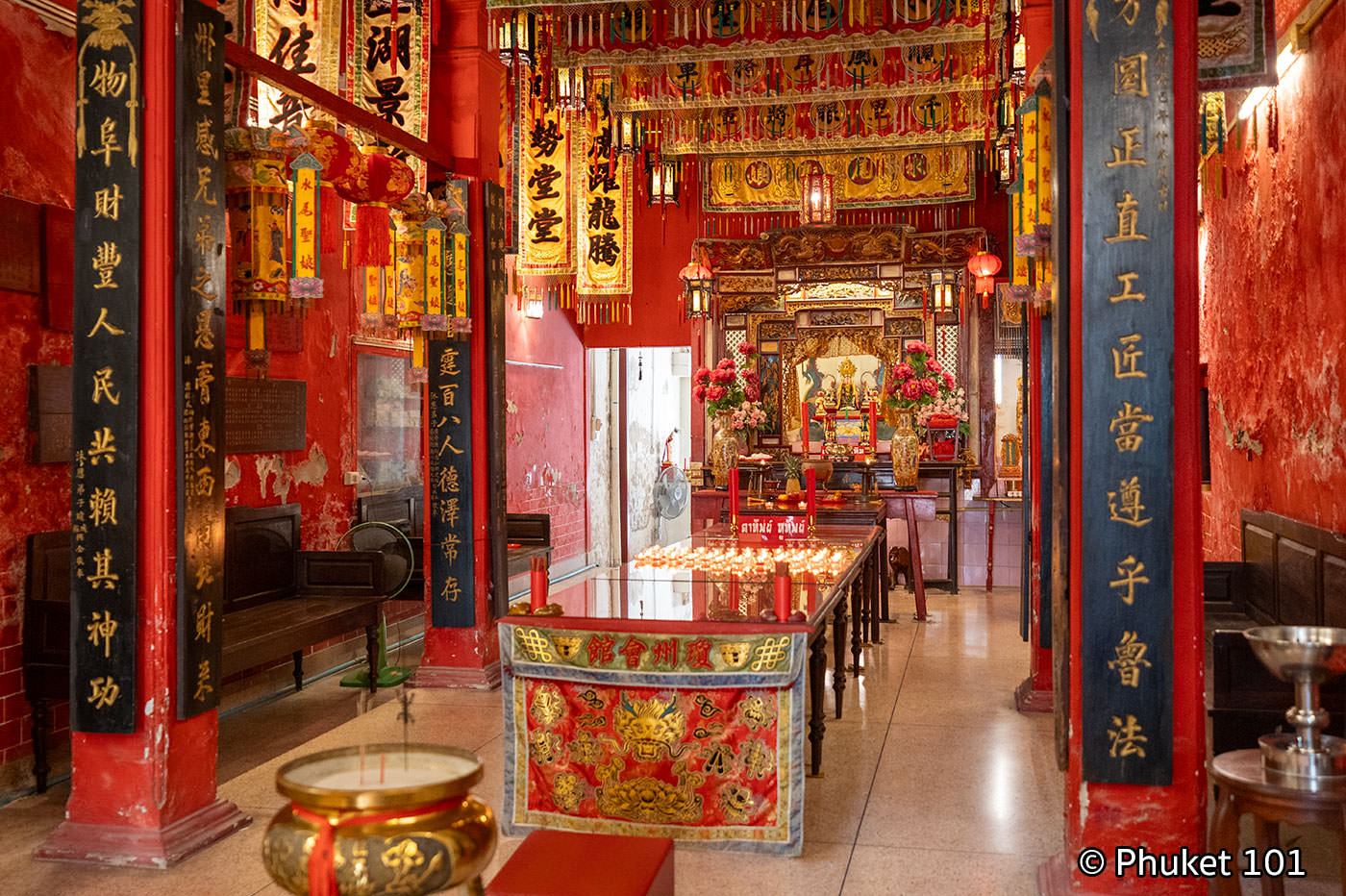
Hainan Shrine is a Chinese temple that would be easy to miss if it were not for its bright red entrance. It is not wider than a shophouse, but it goes deep. Feel free to enter and have a look; just remember to behave respectfully; it is a religious place.
Shopping in Thalang
Long ago, tourists were only spending their holidays on the beach, and Phuket Town was mostly dedicated to local trade. Thalang used to be quiet on weekdays and totally deserted on the weekends. Thalang has evolved a lot in the past years, and a chain reaction started when tourists started to come and take photos of the newly renovated Soi Romanee. More tourists have called for more renovation, attractive shops, and so on.
Phuket Weekend Walking Street

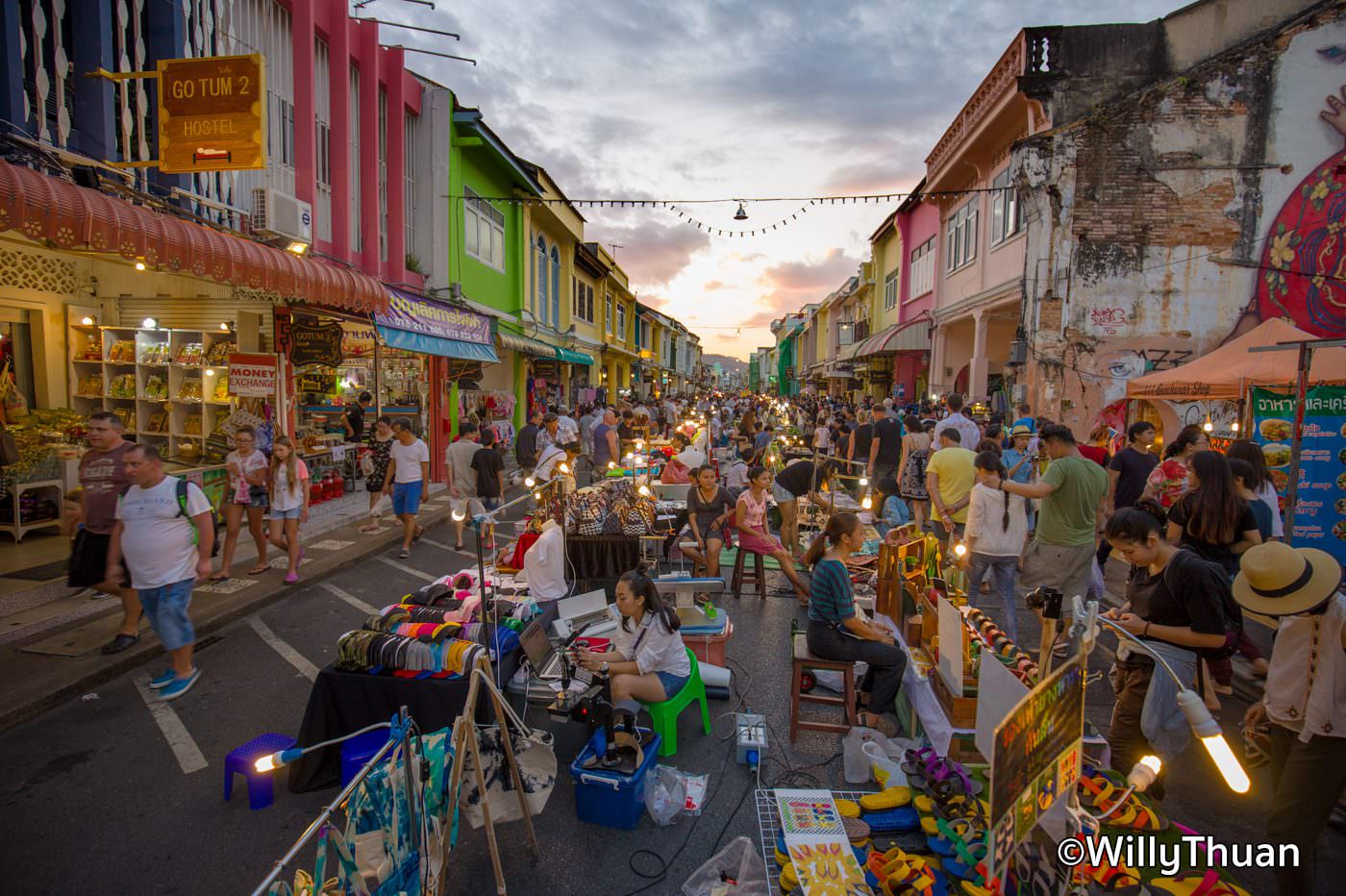
Every Sunday, from 5 pm to 10 pm, Thalang Road is closed to traffic and turns into an immense walking street market. Phuket does have a lot of night markets, but this one is probably the most interesting and attractive. The street is lined by colourful Sino-Portuguese shophouses, and vendors set up their trade in the middle of the road, creating a beautiful perspective.
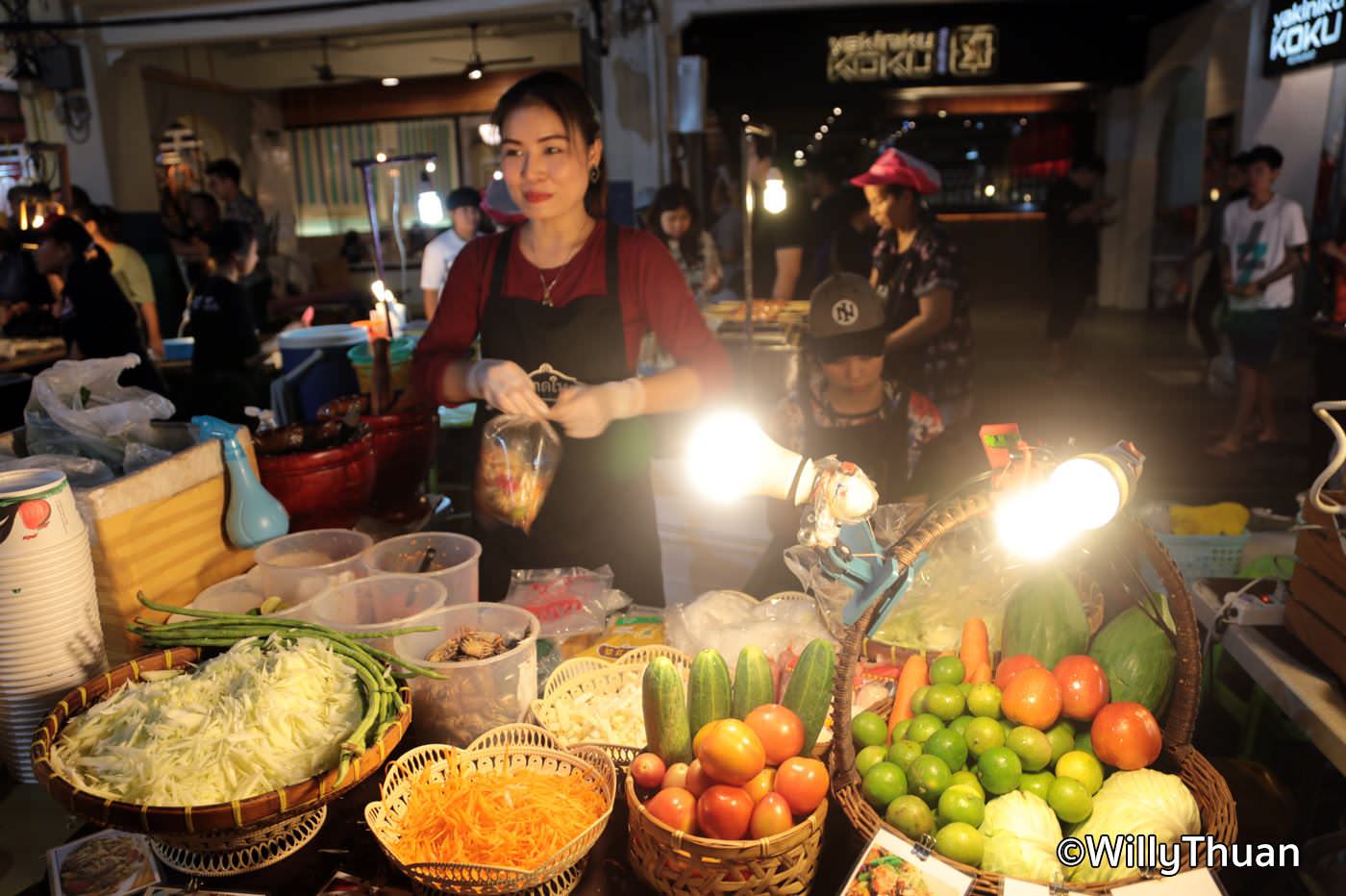
In addition, this is your chance to discover or even try a fun mix of delicious local food and sweets you can’t usually find in one single place. Some will look familiar, and some others might range from strange, all the way to scary (ever tried Yum Kai Mangda Talay?) There are always some street performances and an incredible array of handicrafts, accessories and holiday wear to buy.
Once a week, thousands of people will join the Phuket town walking street. Every shop will open up to the street, selling all kinds of local foods and sweets. It’s always fun to blend in with the locals, but it can get severely crowded.
The Oasis Thalang (Vanich Walking Street)
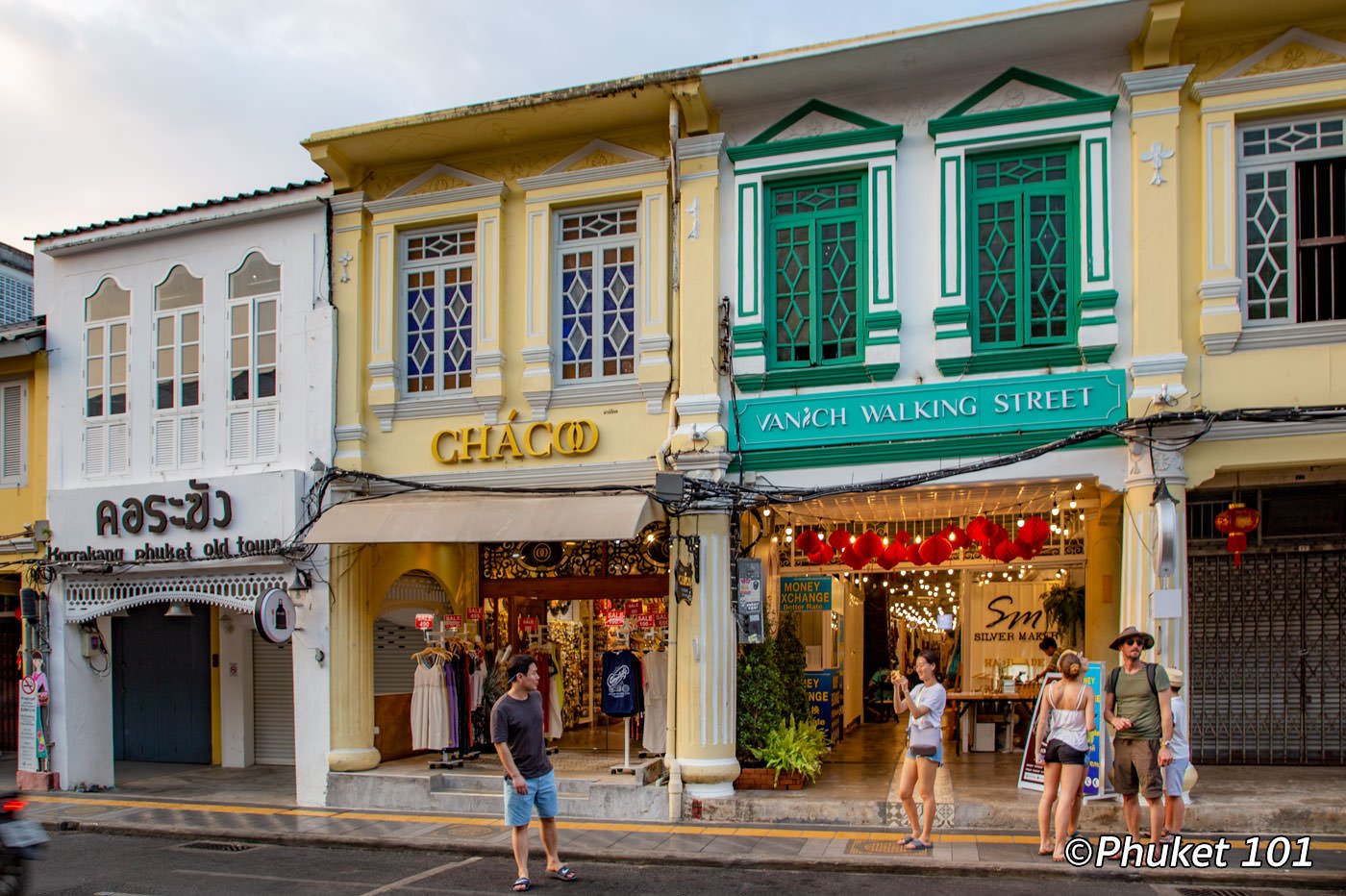
The Oasis Thalang (previously known as Vanich Walking Street and ChimJae Walking Street) is a 150-metre-long covered passage that connects Thalang Road to Dibuk Road. The entrance is easy to miss because it looks like a regular shop front, but step inside, and you will find a narrow air-conditioned lane lined with stalls selling clothing, accessories, souvenirs, batik, Thai silk and of course food. It is a good hideaway if it starts raining, and a shortcut between two of the main streets of old Phuket Town. Open daily from 10 am to 8 pm.
Bulan

Bulan is a very popular local clothing store entirely dedicated to indigo batik.
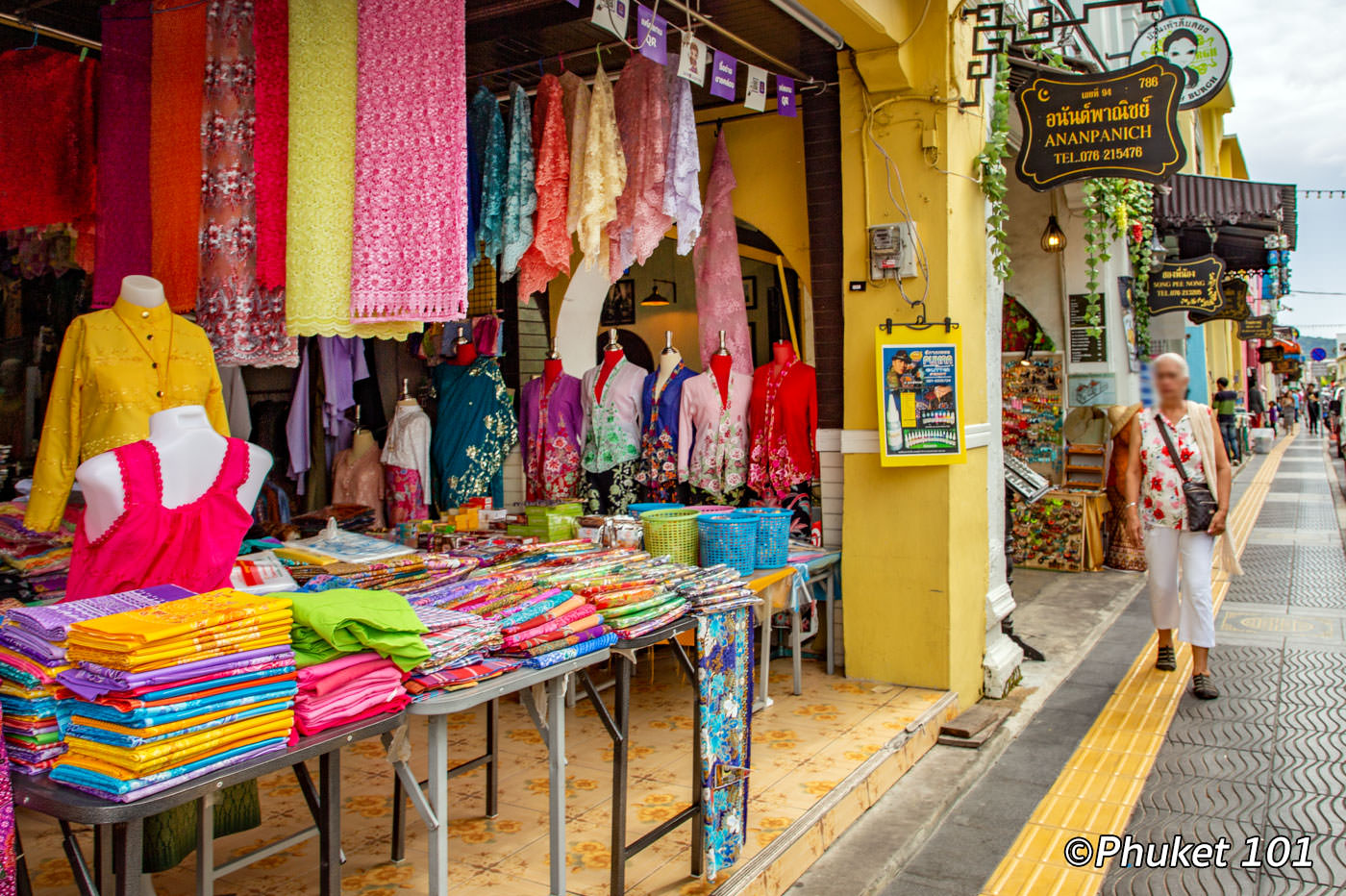
There are still a few local fabric shops at the beginning of Thalang. It’s colourful and quite unique.
Where to Eat?
You’ll find plenty of small cafes and restaurants all along the street. China Inn, which is also a shop, is the most attractive one, but it’s a bit pricey, and the seats are limited. “It costs a lot to make a nice new house from an old house, but it costs a lot more to make a nice old house out of an old house”. China Inn is one of the few houses in Phuket that spends more money to keep its original soul intact. Almost anyone who walks in front of the China Inn will stop for a photo.
China Inn
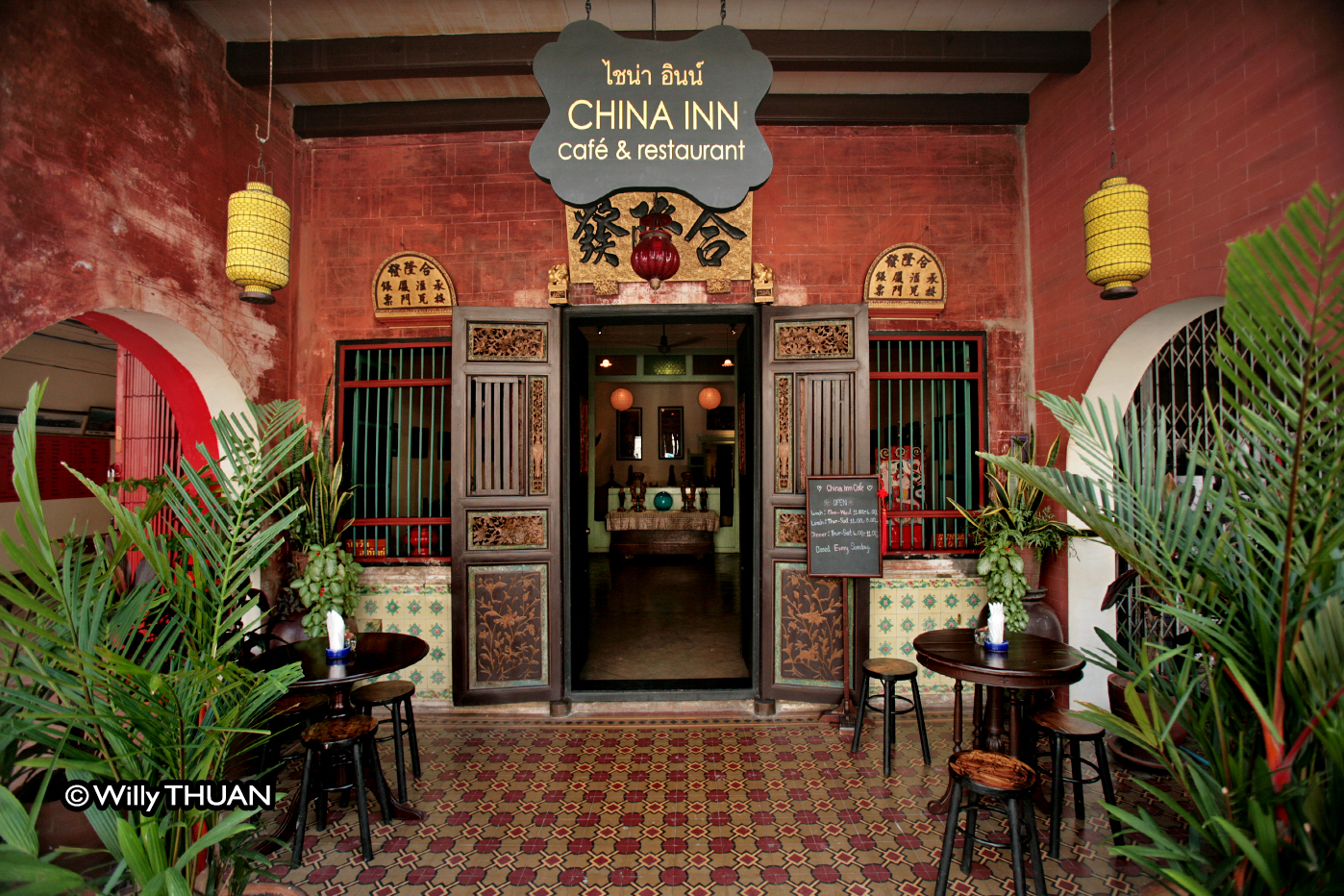
China Inn is housed in a 100-year-old Sino-Portuguese shophouse that originally served as a money exchange office for Chinese tin-mining labourers. The building sat abandoned for years before a two-year restoration brought it back to life around 2008. Unlike most renovations on Thalang Road, the owner chose to preserve the original character rather than modernise it, and the result earned a Conservation Architecture Award. Today it works as a cafe, a restaurant and an antique shop, and the courtyard at the back is one of the most photographed spots on the street.
Kopitiam by Wilai
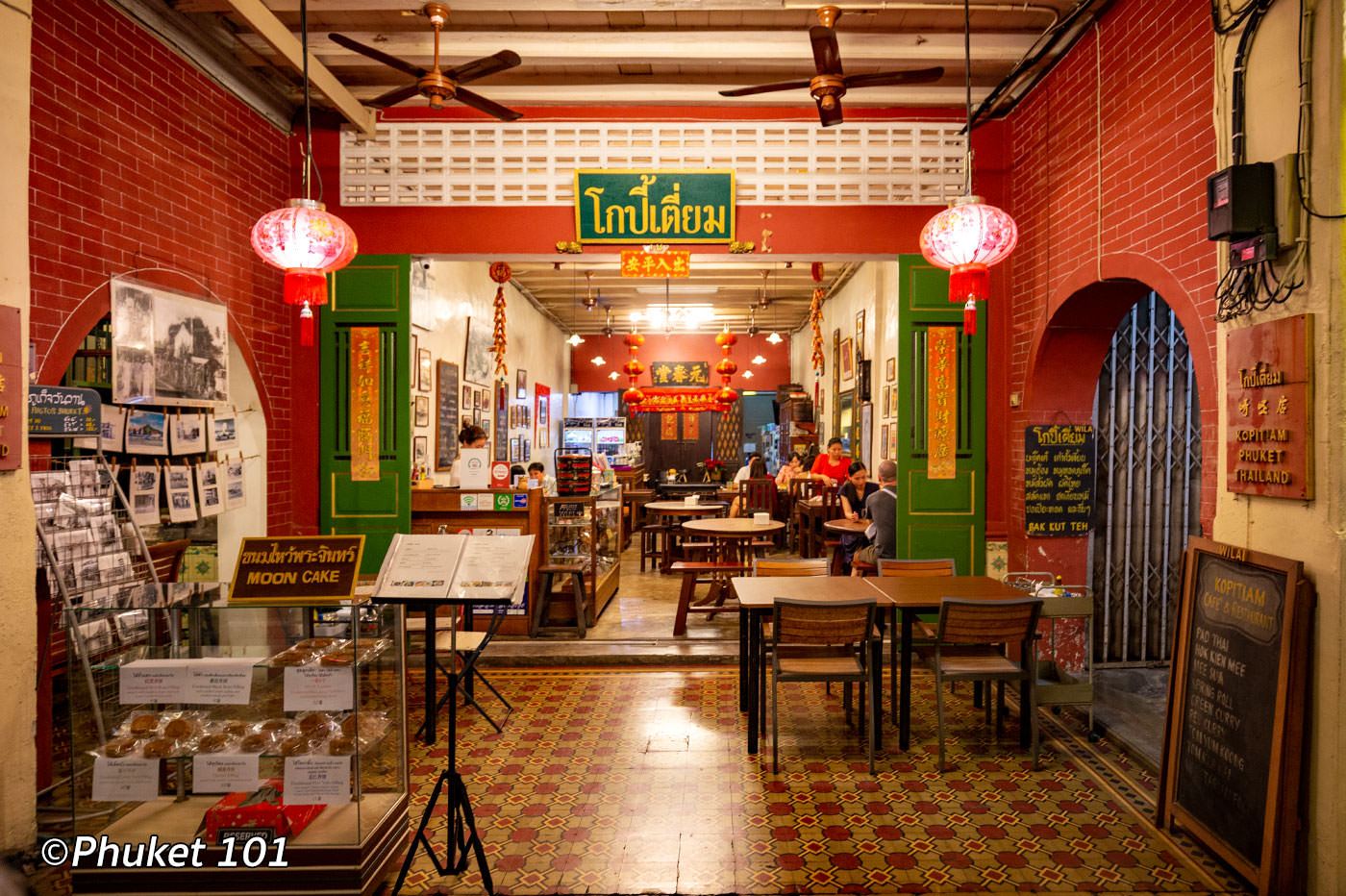
Next are two local restaurants with a nice local atmosphere: Wilai, and its popular sister Kopitiam by Wilai serving their speciality: some excellent Hokkien fried noodles (among a lot of other dishes, of course).
Mue Yium Old Phuket Coffee

Mue-Yium Cafe is a vintage coffee shop and restaurant in the heart of Phuket Old Town, right at the intersection of Yaowarat Road and the famous Thalang Road, where the popular Walking Street Market is held every Sunday. With such a strategic location, the place is popular and convenient to have a light lunch or a drink to take a break during your exploration of the old and colourful streets of town.
Location: Phuket Town
Address: 6 Thalang Rd, Tambon Talat Yai, Mueang Phuket District, Phuket 83000
Phone: 064 246 5562
Macchiato House and CakeBox

Macchiato House and CakeBox is a small coffee shop serving excellent cakes and snacks, but most importantly, they prepare one of the best coffees in town.
Eleven Two & Co.

Eleven Two & Co. is another favourite bar on Thalang Road. This place has been open for a couple of years and seems to have found the formula to be inviting. The front of the shop is widely open with a couple of inviting seats on the terrace. Inside, you can browse a bric-à-brac of souvenirs, so people tend to stop and have a look.
Baan 109 Bar & Restaurant

Baan 109 is a fun, vintage-looking restaurant as well as a casual bar on the popular Thalang Road. The name ‘Baan’ means house and the number 109 is the street number.
Location: Phuket Town
Address: 109 Thalang Rd, Tambon Talat Yai, Mueang Phuket District, Phuket 83000
Open: 11 am – 11 pm
Phone: 095 421 1827
Koku Yakiniku
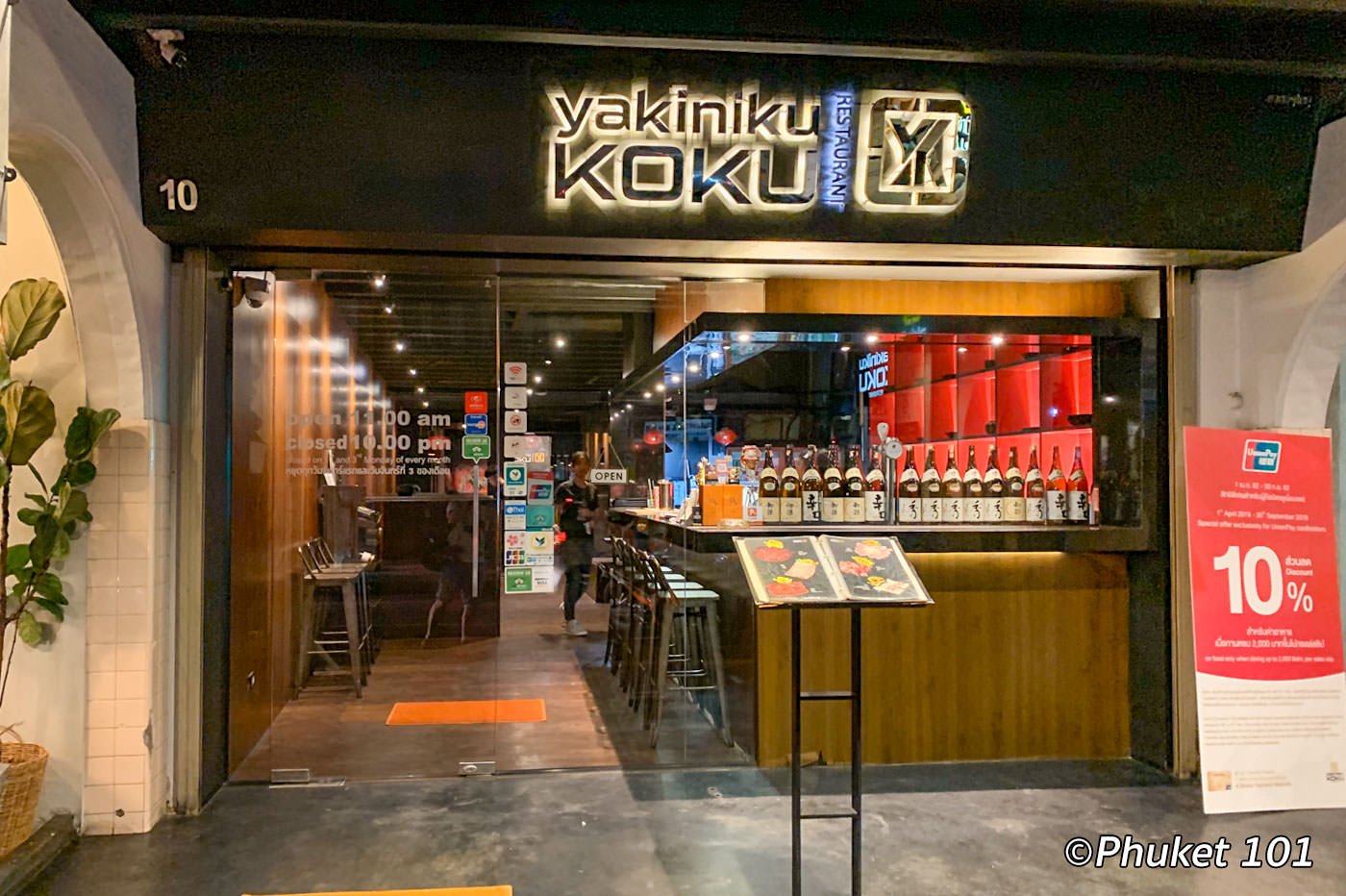
Koku Yakiniku is a popular Japanese Barbecue that has been around Phuket for almost 15 years, changing location frequently around Phuket town until it opened on this popular street. Grilled meats and seafood are extremely popular in Thailand, just read about Moo Kata Buffets to understand. I went to Koku Yakiniku dozens of times in the past, but lately, it has had a lot of ups and downs.
At Night in Thalang Road
Shhh. Hidden Bar
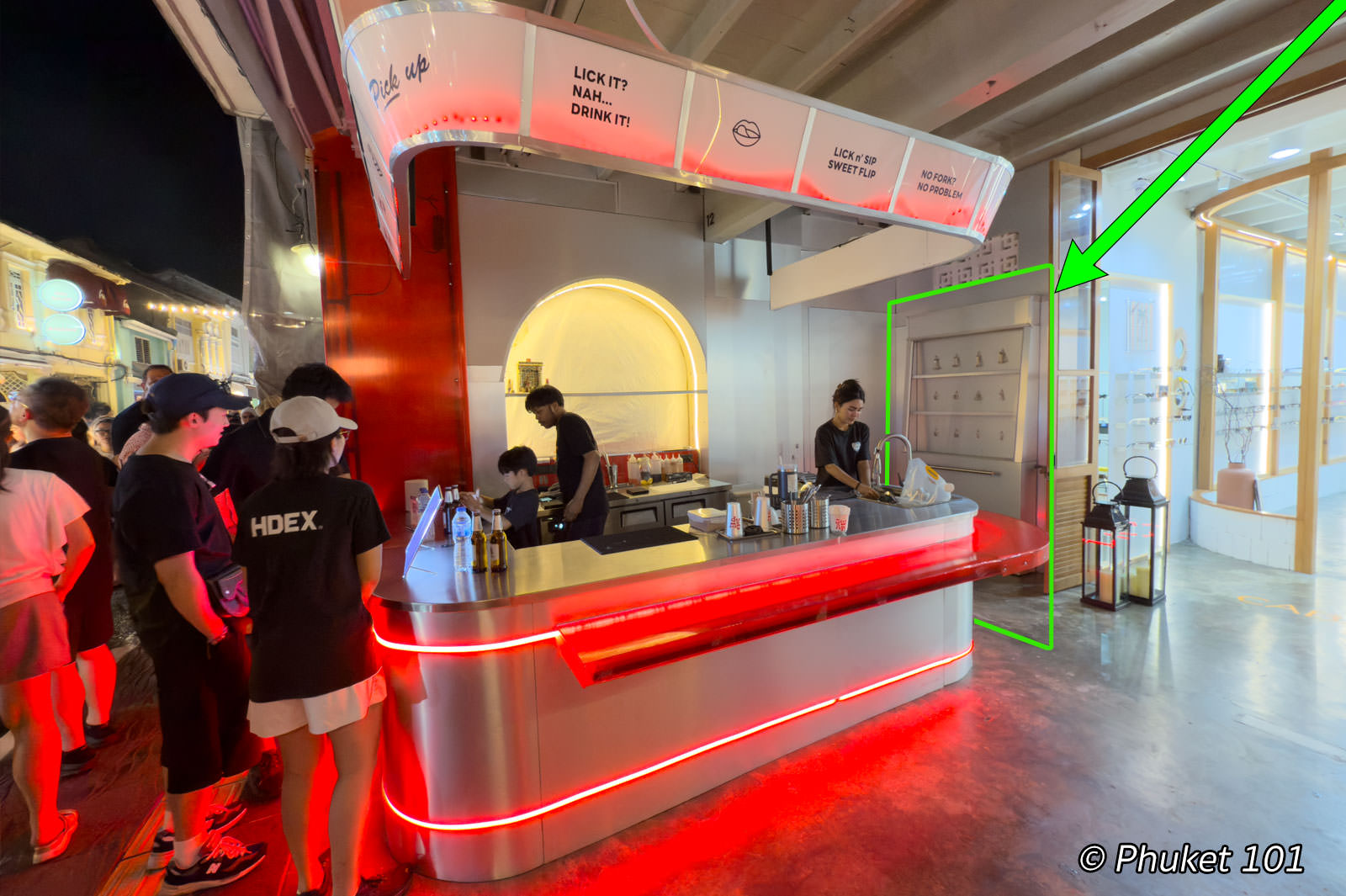
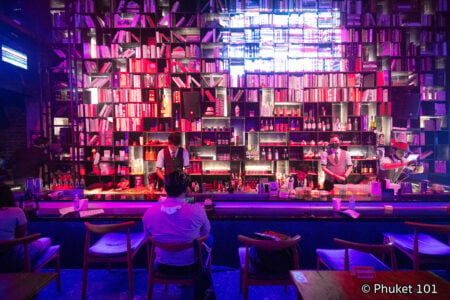
I uncovered one of Phuket’s most intriguing nightlife experiences hidden in the heart of Old Town, right on Thalang Road, where the famous Sunday Walking Street Market is held. Thousands of people walk by the entrance hidden behind a fake vending machine, and very few know what is hiding behind. Even though I was actively looking for it, I had a hard time finding it; I had to ask the shop next door!
Worth trying near Thalang Road
One Chun
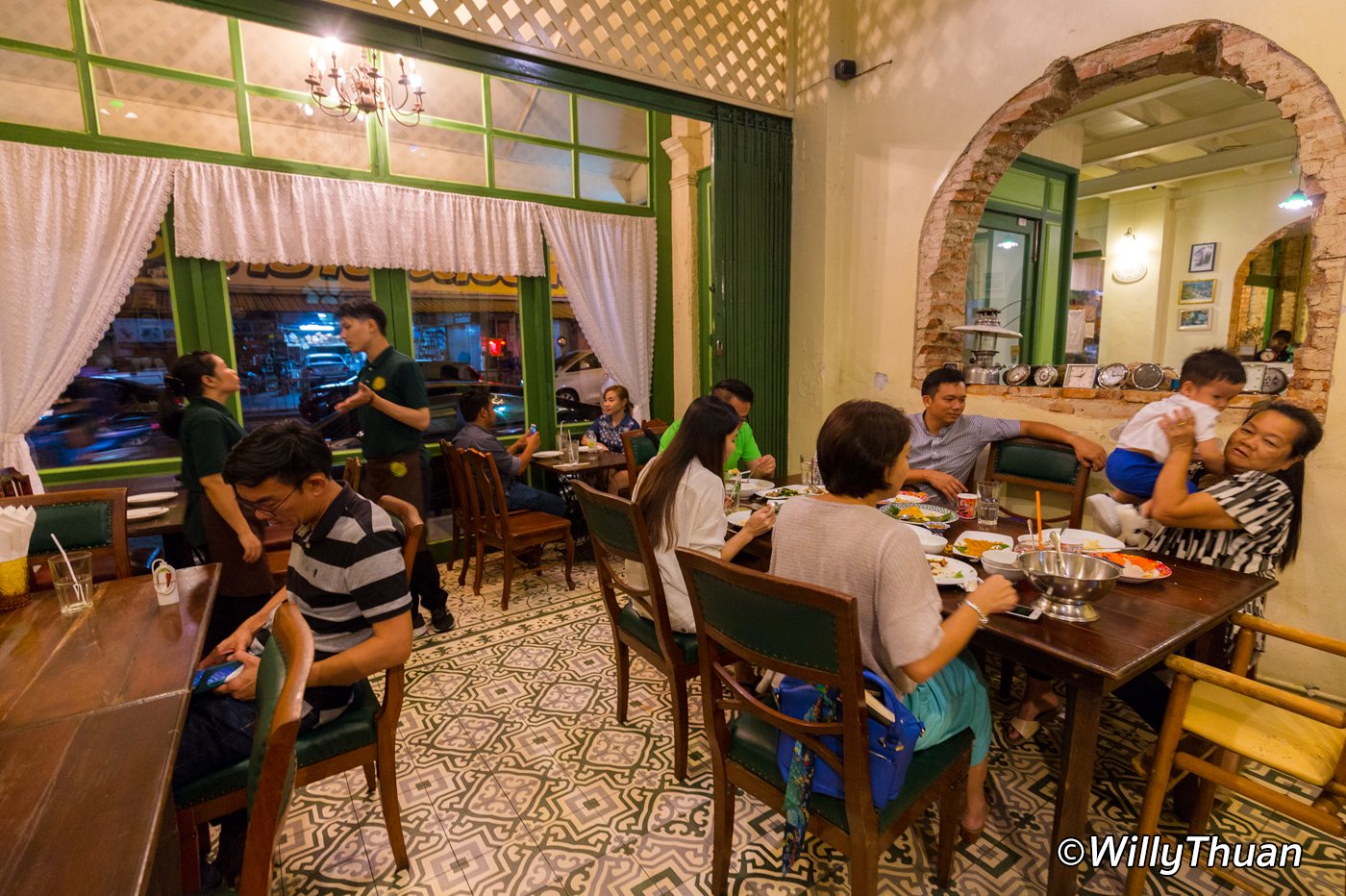
| Michelin Restaurant |
If you can’t find what you are looking for, walk a little further and stop at One Chun, one of the great local restaurants in Phuket town, just next to the weekend walking street market.
Raya House

Raya House is also a restaurant you should try. It’s an old house, run by two old ladies and serving excellent Thai food. What they did is even better than a good renovation: they didn’t renovate at all. Try ‘yellow curry crab with Kanom Jeen’ (rice noodles)’.
My Take
I have watched Thalang Road transform from a forgotten local street into Phuket’s most popular walking destination, and I have mixed feelings about it. The renovations are impressive, and the Sunday market is genuinely one of the best things to do on the island. But I still find myself drawn to the unrenovated shophouses, the ones with peeling paint and decades of stories behind their shutters. If you come on a weekday morning, before the cafes fill up, you can still catch a glimpse of what this street used to feel like. That is when I like it most.
About Thalang Road shophouse architecture
The two-story shophouses in Old Phuket Town generally have two purposes: commerce and residential. The building has a specific character with a narrow front and long depth. The front of the shophouses consists of a connected arch walkway or ‘arcade’ covering the length of the street known as ”Ngor-Ka-Kee” from Chinese Hokkien.
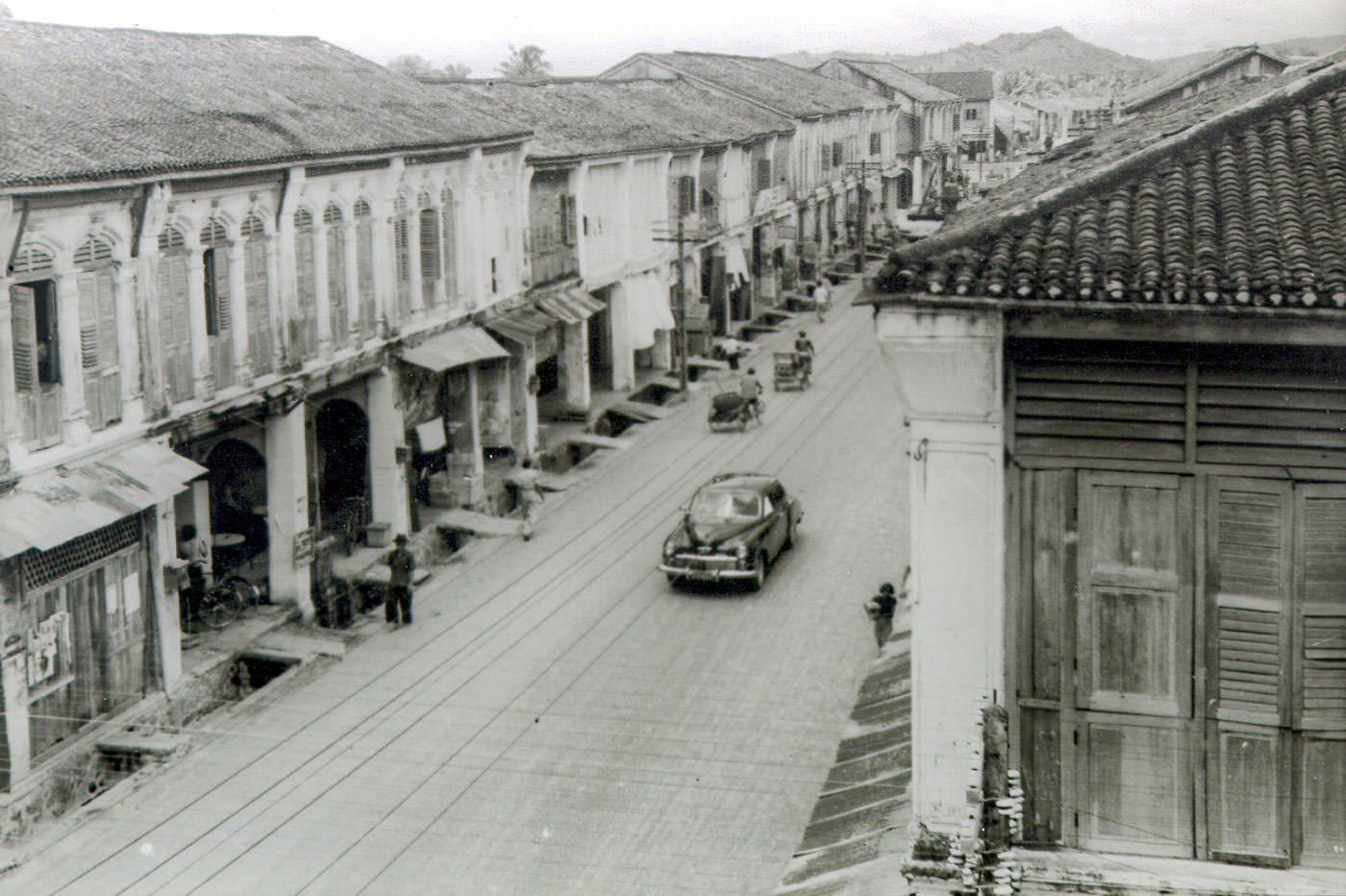
The ground floor’s long depth arrangements comprised five main sections:
– The first section of a shophouse is the shop front with doors and windows, including an air void above the windows. The shop front resembles the face of a dragon with mouth doors, two eyes (two windows) and an air void above the windows (eyebrows).
– The second section is either a shop or a welcome guest area.
– The third section is considered to be going into the body of the dragon. There is usually an area in the middle of the house for a water well called ‘Chim-Jae’. This area is for washing. There is no roof to allow the sun to shine through as a source of light, and also to allow ventilation as the heat is confined by the width of the house.
– The fourth section is the dining area, which is connected to the kitchen.
– The last part is the toilet and is considered the tail of a dragon.
The second floor, where the bedrooms are, is called ‘Lao-Teng’, which means upstairs. The second floor at the front of the house protrudes above the ground floor’s exterior and becomes a cover for the ”arcade” walkway underneath. The covered walkway’s purpose is to shelter people from Phuket’s heavy rain.
(as described inside the Peranakan Phuket Museum)

Beyond Thalang Road
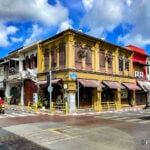
These old renovated streets still provide many angles and lights to satisfy any photographer’s itchy finger. Among the well-known Sino-Portuguese houses are the beautiful ‘Thai Hua museum‘ and Endless Summer. Thalang, which was the first to bury its ugly electric cables underground, is built with the typical archway to protect the walkers from rain and sun. All the shop-houses are often built around the same layout: three floors with small windows in the front and the back to preserve the fresh air and with bars to protect from bad guys.
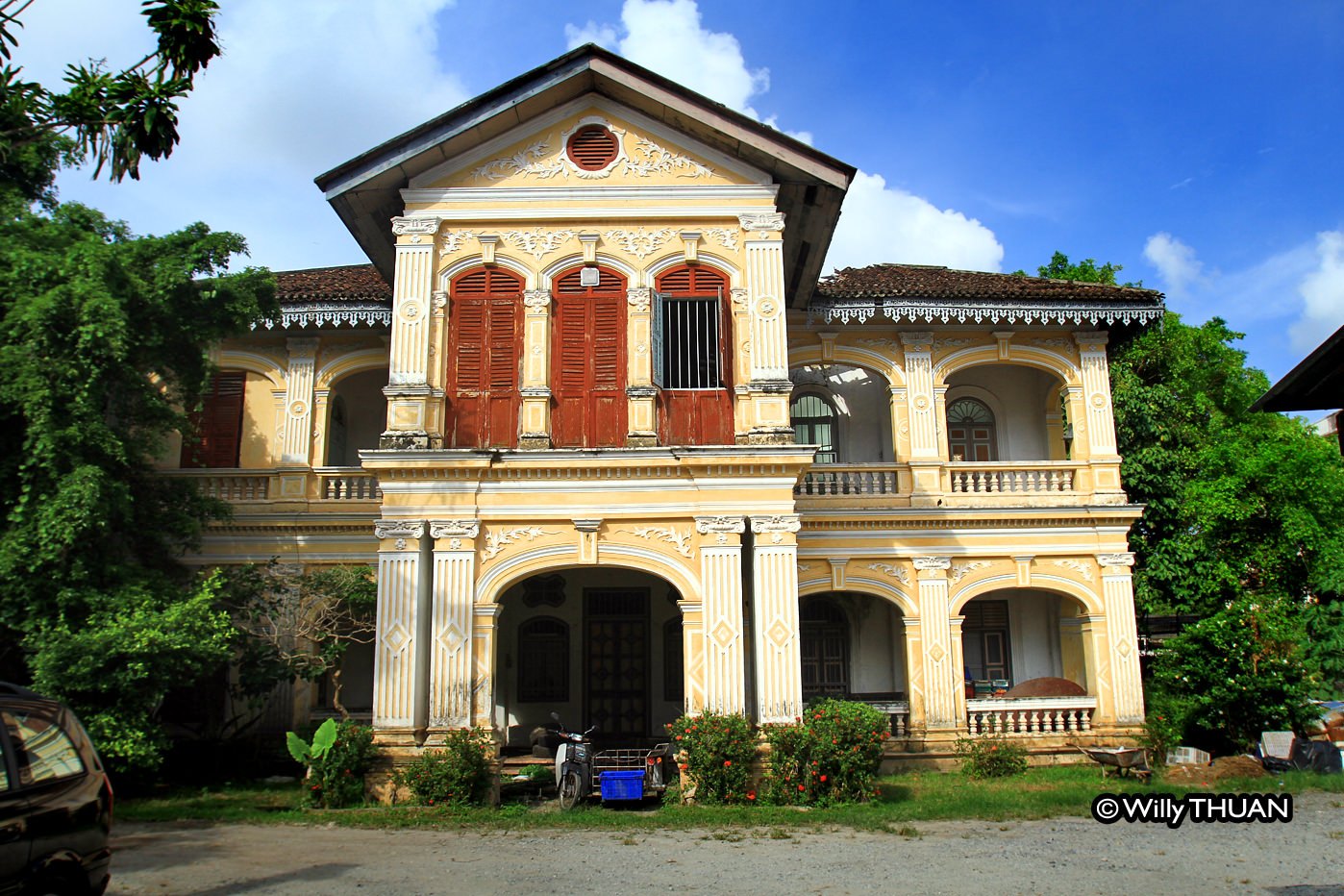
There are some fascinating ‘not yet renovated’ mansions in the streets around… Click here to see the “19 Amazing Mansions in Phuket Town.”
Hotel near Thalang Road
The Memory at On On Hotel

The Memory at On On Hotel is undoubtedly the most iconic and best-known heritage hotel on Phuket Island for a few reasons. Built in 1927 and called Un Un Hotel, the hotel possesses a strong Sino-Portuguese personality in a central location on Phang Nga Road, the heart of old Phuket Town.
Check the rates
Hotel Verdigris

Hotel Verdigris is an amazing gem with a great location on Yaowarat Road in Old Phuket Town. The hotel is small and intimate, designed with passion by the young owner around the story of Martina Rozells, an important but mysterious personality of Phuket in the 18th century. Read more
Check the rates
Casa Blanca Boutique Hotel

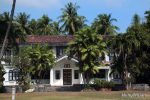
Casa Blanca’s whitewashed façade and baskets of bougainvillaea flowers give it a fresh, inviting look before you even step inside. This 17-room hotel offers a cosy place to stay with bright, well-furnished rooms and a small shared swimming pool.
Check the rates
Popular Ways to Discover Phuket Town
Photo Gallery


Thalang Road Map
If you are on mobile, add the map here: https://goo.gl/maps/1fCGd7dsYjTgNn4N8
Other Streets of Phuket Town
Your Phuket Town Travel Guide